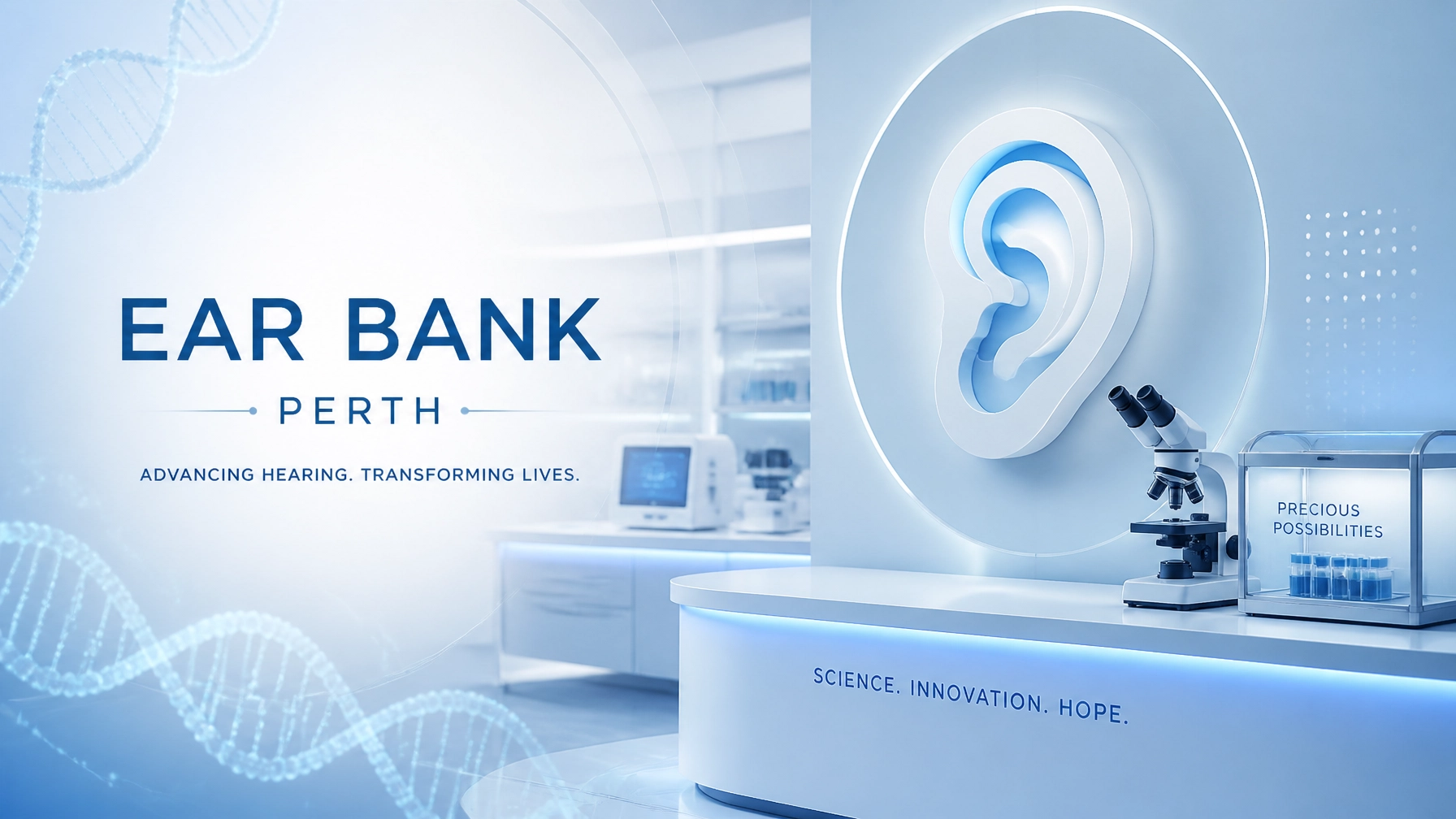
Perth’s First Ear Bank: What It Means for Hearing Loss Research
As an audiologist here in Western Australia, I’ve seen some incredible shifts in technology over the years. We’ve gone from bulky, whistling boxes to sleek, rechargeable hearing aids that can stream your favourite footy match directly to your ears. But what if I told you we are standing on the edge of something even bigger?
Something that isn't just about managing hearing loss, but potentially curing it at a genetic level?
Perth has just hit a massive milestone with the opening of the Aussie Ear Bank (officially known as the Australasian Hearing Registry and Biobank or AHRB). This is a world-class facility right in our backyard at the Ear Science Institute Australia in Subiaco.
In this post, I’m going to break down exactly what an "ear bank" is, why it’s a game-changer for my patients, and how it could change the lives of thousands of families across WA. Keep reading this post as we explore how this local innovation is putting Perth on the map for global hearing research.
What Exactly is an "Ear Bank"?
I get this question a lot in the clinic. People hear "ear bank" and think of a shelf full of spare ears. While that sounds like something out of a sci-fi flick, the reality is much more scientific (and a lot less creepy).
The Aussie Ear Bank is a specialised biobank and digital registry. A biobank (a storage facility for biological samples) isn't just a freezer; it’s a high-tech library that stores:
- Genetic Material: This includes blood, saliva, and sometimes tiny bits of ear tissue.
- Audiometric Data: Detailed results from hearing tests (the "audiograms" we do in the clinic).
- Electrophysiological Data: Measurements of how the ear and brain respond to sound (electrical signals sent from the ear to the brain).
- Clinical History: A record of a patient's hearing journey and their family history.
By collecting all this information in one place, researchers can start to see patterns. They can link a specific gene mutation (a permanent alteration in the DNA sequence) to a specific type of hearing loss. This is the holy grail of audiology.

Why Does This Matter for Perth Families?
If you’ve lived in Perth for a while, you know we sometimes feel like the most isolated city in the world. But when it comes to medical research, we punch way above our weight. Having this facility in Subiaco means Perth patients are at the front of the queue for future clinical trials.
1. Focus on Hereditary Hearing Loss
Around one in every 1,000 babies is born with significant hearing loss, and in about half of those cases, it’s down to genetics. Many of my patients have spent years wondering why their hearing started to fade in their 30s or 40s when their mates were still fine. Often, the answer is in their DNA.
The Aussie Ear Bank focuses specifically on hereditary hearing loss (hearing loss passed down through families). By building this database, researchers can:
- Identify exactly which genes are causing the trouble.
- Develop precision treatments tailored to an individual’s genetic makeup.
- Predict how a child's hearing might change over time, allowing for much better paediatric audiology care.
2. Fast-Tracking Gene Therapy
Now, this is where it gets really exciting. Gene therapy (the process of replacing or repairing a faulty gene to treat a disease) is already showing massive promise overseas. There have been cases where children born profoundly deaf have regained hearing after a single injection.
Because we now have the AHRB right here, we are creating the "infrastructure" needed to bring those trials to Australia. Do not wait decades for this to trick down from the US or Europe: the Aussie Ear Bank is designed to make Perth a hub for these trials as soon as they are ready.
How the Process Works (Step-by-Step)
You might be wondering, "How does someone actually get involved in an ear bank?" It’s a very straightforward process, and if you have a family history of hearing loss, it's something worth discussing with your specialist.
- Initial Referral: Most people are invited to join via their ENT (Ear, Nose, and Throat) specialist or through a specialist audiologist in Perth.
- Consent: You’ll be given a clear rundown of how your data will be used. You are always in control of your information.
- Sample Collection: Usually, this is just a simple blood test or a saliva swab. In some rare surgical cases, a tiny bit of tissue might be collected.
- Audiological Testing: You’ll undergo a series of high-level hearing tests so they have a complete "picture" of your hearing function.
- Digital Registry: Your samples and data are securely stored. Researchers from all over the world can then apply to use this data (anonymously) to help their studies.
Make sure to talk to your GP or audiologist if you think your hearing loss might be genetic. It’s not just about helping yourself; it’s about helping your kids and grandkids down the line.

Practical Summary: What You Need to Know
Now that we have looked at what the Ear Bank is, let's wrap up the key takeaways so you can walk away with a clear understanding:
- It's a local first: The Aussie Ear Bank is Australia's first biobank dedicated specifically to hereditary hearing loss, and it's located right here in Perth.
- The Goal is a Cure: The ultimate aim isn't just better hearing aids: it's developing gene therapies that could one day reverse certain types of deafness.
- It's a Team Effort: Led by Professor Marcus Atlas and the team at Ear Science Institute Australia, it's backed by the WA Government and even former PM John Howard (who knows a thing or two about the challenges of hearing loss!).
- Innovation takes time: While gene therapy isn't a "standard" treatment yet, the Ear Bank is the foundation that will make it possible in the future.
What Should You Do Now?
While we wait for these futuristic cures to hit the mainstream, you still need to look after the ears you have! If you’ve been struggling with your hearing, or if you’ve noticed a family trend of hearing loss, here is my expert advice:
- Get a baseline test: You can't track change if you don't know where you're starting. Book a comprehensive hearing assessment.
- Check your eligibility: Many people in Australia can access free hearing aids or government subsidies.
- Explore the registry: If you have a known genetic condition (like Usher Syndrome or Waardenburg Syndrome), look into the Aussie Ear Bank to see if you can contribute.
- Stay Informed: Hearing technology is moving fast. Whether it's a new "ear bank" or the latest CI (Cochlear Implant) technology, staying in the loop is the best way to ensure you never miss a sound.

At Pristine Hearing, we’re not just about selling devices; we’re about keeping our community connected. We are incredibly lucky to have institutions like the Ear Science Institute pushing the boundaries of what's possible.
If you have questions about your hearing, or if you're worried about a family history of hearing loss, come in and have a yarn. Bob’s your uncle, we’ll get you sorted with the best care available today while keeping an eye on the miracles of tomorrow.