
7 Signs of Hearing Loss Perth People Mistake for Normal Ageing (And How a Quick Hearing Test Can Tell)
Many people assume hearing changes are simply part of getting older. Sometimes they are: but “normal ageing” does not mean you have to struggle through conversations, turn the television up loudly, or stop enjoying the activities you love.
In my work with patients at Pristine Hearing Perth, I often hear comments such as:
- “Everyone mumbles these days.”
- “I can hear perfectly well when it’s quiet.”
- “It’s only a bit of ringing.”
- “I’m not ready for a hearing aid.”
- “It’s probably just wax.”
These explanations are understandable, but they can delay helpful support.
The good news is that a quick hearing screening can help show whether your concerns are likely to be age-related hearing changes, earwax, another ear problem, or hearing loss that needs a more detailed assessment.
Pristine Hearing offers a free 15-minute hearing screening for people who are unsure about their hearing. A full adult hearing assessment is also available when more detailed testing is needed.
1. You keep turning the TV up
If family members regularly tell you that the television is too loud, pay attention.
Age-related hearing loss often affects higher-frequency sounds first. These include parts of speech such as “s”, “f” and “th”. As a result, you may hear the general sound of a programme but miss individual words.
You might:
- Turn the TV up before anyone else needs to
- Use subtitles more often
- Ask family members to stop talking while the television is on
- Find some presenters easier to understand than others
- Hear music clearly but struggle with dialogue
This is not necessarily a problem with the television or the presenter. It may be a sign that speech is becoming harder for you to distinguish.
What a hearing test can show
A hearing test measures the softest sounds you can hear at different pitches. This creates a profile called an audiogram (a graph showing your hearing ability across different frequencies).
I can then explain whether your hearing is within the expected range or whether certain pitches are reduced.
Practical takeaway: Ask someone in your household whether the TV volume seems unusually high. If it does, arrange a free hearing screening rather than guessing.
2. You frequently ask people to repeat themselves
Everyone says “pardon?” occasionally. The concern is when asking people to repeat themselves becomes a regular part of your conversations.
You may notice that you:
- Ask “what?” several times during a conversation.
- Understand the first few words but lose the rest of the sentence.
- Answer the wrong question because you misheard.
- Find yourself watching the speaker’s lips closely.
- Pretend you heard because you do not want to interrupt again.
My patients often compensate by relying on context. For example, if someone says, “Would you like a cup of tea?”, you may guess the question from the situation even when you did not hear every word.
That strategy can work for a while, but it becomes exhausting: especially when the topic is unfamiliar.
Hearing loss is not a sign of low intelligence or poor attention. It simply means your ears and brain are receiving less complete information.
Practical takeaway: Keep a simple tally for one week. If you ask people to repeat themselves several times a day, book a hearing check in Perth.
3. You struggle more in cafés, restaurants and family gatherings
Many people say, “I can hear fine in a quiet room.” That does not rule out hearing loss.
Noisy environments are often where early hearing difficulties become most obvious. Background noise competes with speech, and reduced hearing makes it harder to separate one voice from another.
You may struggle at:
- Busy Perth cafés and restaurants
- Family barbecues
- Shopping centres
- Community groups
- Sporting events
- Work meetings
- Conversations in the car
You might find yourself choosing a seat with your back to the wall, asking everyone to speak one at a time, or relying heavily on the person sitting beside you.
One common pattern I see is a person who follows a conversation easily with one other person but becomes lost when three or four people start talking. This is a genuine hearing concern: not simply a failure to concentrate.
At Pristine Hearing, a detailed assessment can include speech-in-noise testing (a test that measures how well you understand speech while background noise is present).

Practical takeaway: Do not judge your hearing only by how well you hear in a silent room. Notice what happens in the real-world situations that matter to you.
4. You describe people’s voices as muffled or “mumbling”
“Mumbling” is one of the most common ways people describe early hearing loss.
You may hear that someone is speaking, but the words do not sound sharp or clear. Some voices may be particularly difficult, including:
- Children’s voices
- Women’s voices
- People speaking softly
- People with accents
- Speakers who turn away from you
- Voices coming from another room
The problem is often not that the speaker is unclear. Your hearing may be missing the finer details that make speech understandable.
Age-related sensorineural hearing loss means changes have occurred in the inner ear or hearing nerve. Sensorineural means the issue is related to the sound-sensing structures rather than simply a blockage in the ear canal.
A physical ear examination and hearing assessment help distinguish this from conductive hearing loss, which occurs when sound is blocked from travelling through the outer or middle ear. Earwax is one possible cause.
Practical takeaway: If everyone seems to be mumbling, check your hearing before blaming your family, friends or the latest generation.
5. You avoid phone calls or miss the doorbell
Phone conversations remove important visual clues. You cannot see someone’s face, gestures or lips, so hearing difficulties can become much more noticeable.
You may:
- Avoid calling friends or family
- Prefer text messages because they are easier
- Miss parts of conversations on mobile phones
- Ask people to speak louder
- Struggle when the phone signal is not perfect
- Miss the doorbell, oven timer or someone calling from another room
Missing occasional sounds is normal. Consistently missing everyday alerts deserves attention, particularly if other people hear them easily.
A hearing check can assess each ear separately and help identify whether one ear is hearing differently from the other. Uneven hearing should always be discussed with an audiologist or GP.
Practical takeaway: Tell your audiologist which sounds you miss at home. These details help connect test results with your everyday life.
6. You experience ringing, buzzing or hissing in your ears
Ringing in the ears is called tinnitus (hearing a sound that does not come from an external source). It may sound like ringing, buzzing, humming, hissing or whistling.
Tinnitus can occur with or without hearing loss. However, it is worth mentioning during a hearing check, particularly if it is:
- Persistent
- Getting louder
- Mainly in one ear
- Affecting your sleep or concentration
- Accompanied by reduced hearing
- Associated with dizziness or ear pain
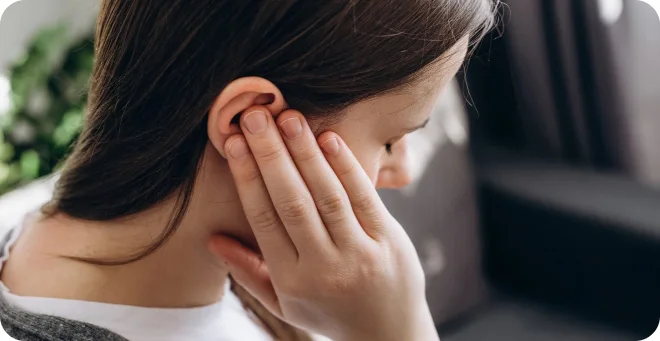
I ask my patients how tinnitus affects their daily lives rather than focusing only on whether it is present. Someone may have mild tinnitus that they barely notice, while another person may find it extremely intrusive.
A hearing assessment can identify hearing changes and guide management. Pristine Hearing also provides tinnitus support and management, including sound therapy options, counselling and personalised strategies.
Practical takeaway: Do not dismiss persistent tinnitus as “just getting older”. Record when it occurs and discuss it during your hearing check.
7. You withdraw from social situations because listening is tiring
This sign is often missed because it may look like a personality change.
You may stop attending:
- Family gatherings
- Clubs or community activities
- Church or social groups
- Lunches with friends
- Meetings
- Events with live music or background noise
You may tell yourself you are simply less social than you used to be. In reality, listening may have become hard work.
When your hearing is reduced, your brain must use extra effort to fill in missing words. That can lead to listening fatigue (mental tiredness caused by concentrating intensely to follow speech).
One of my anonymised composite examples is a retired Perth resident who still enjoyed seeing friends but began leaving lunches early because she could not follow the conversation. She initially thought she was becoming antisocial. Her hearing screening showed that speech clarity was reduced in both ears, particularly in noisy settings. Understanding the cause helped her make an informed decision about her next steps.
The aim of a hearing test is not to pressure you into buying hearing aids. It is to give you clear information so you can choose what happens next.
Practical takeaway: If hearing difficulty is changing where you go or who you see, arrange a check now. You deserve to stay connected.
How a quick hearing test can tell the difference
A free screening is a simple first step:
- Book your free 15-minute hearing screening with Pristine Hearing.
- Discuss your concerns, including noisy environments, tinnitus, phone calls and family observations.
- Have your ears checked for obvious wax or debris.
- Complete a basic hearing screening to identify whether further testing is recommended.
- Receive clear next steps without pressure.
If the screening identifies a concern, I may recommend a full adult hearing assessment. Pristine Hearing’s detailed assessment usually takes about 60 minutes and may include:
- Pure-tone audiometry
- Speech audiometry
- Immittance testing, which checks middle-ear function
- Speech-in-noise testing
- A discussion about your goals and communication needs
The full assessment is listed at $155, with rebates potentially available. If wax is affecting your hearing, explore our professional earwax removal service.
When to seek urgent medical care
Do not wait for a routine hearing screening if your hearing changes suddenly.
Seek urgent medical attention if you experience:
- Sudden hearing loss, especially in one ear
- Hearing loss after a head injury or very loud noise
- Hearing loss with severe dizziness or imbalance
- Ear pain, discharge or bleeding
- Facial weakness, numbness or other neurological symptoms
Healthdirect advises people with sudden hearing loss to attend a local emergency department. Read its hearing loss guidance for more information.
Take the uncertainty out of your hearing
You do not need to wait until hearing loss becomes severe. Turning up the TV, asking people to repeat themselves, struggling in noise, experiencing tinnitus and avoiding conversations are all valid reasons to arrange a hearing check.
At Pristine Hearing Perth, I focus on explaining what your results mean in plain English and matching advice to your everyday life. Whether the result is normal, points to wax, or shows hearing loss, you leave with greater clarity.
Book a free 15-minute hearing screening in Perth today through the Pristine Hearing adult hearing services page, or book an assessment online.
Our Perth clinic is located at 1/440 Flinders Street, Nollamara WA. You can also call (08) 6336 7170 for friendly advice.
Once you know what is happening, bob’s your uncle: you can make a confident decision about your hearing health.