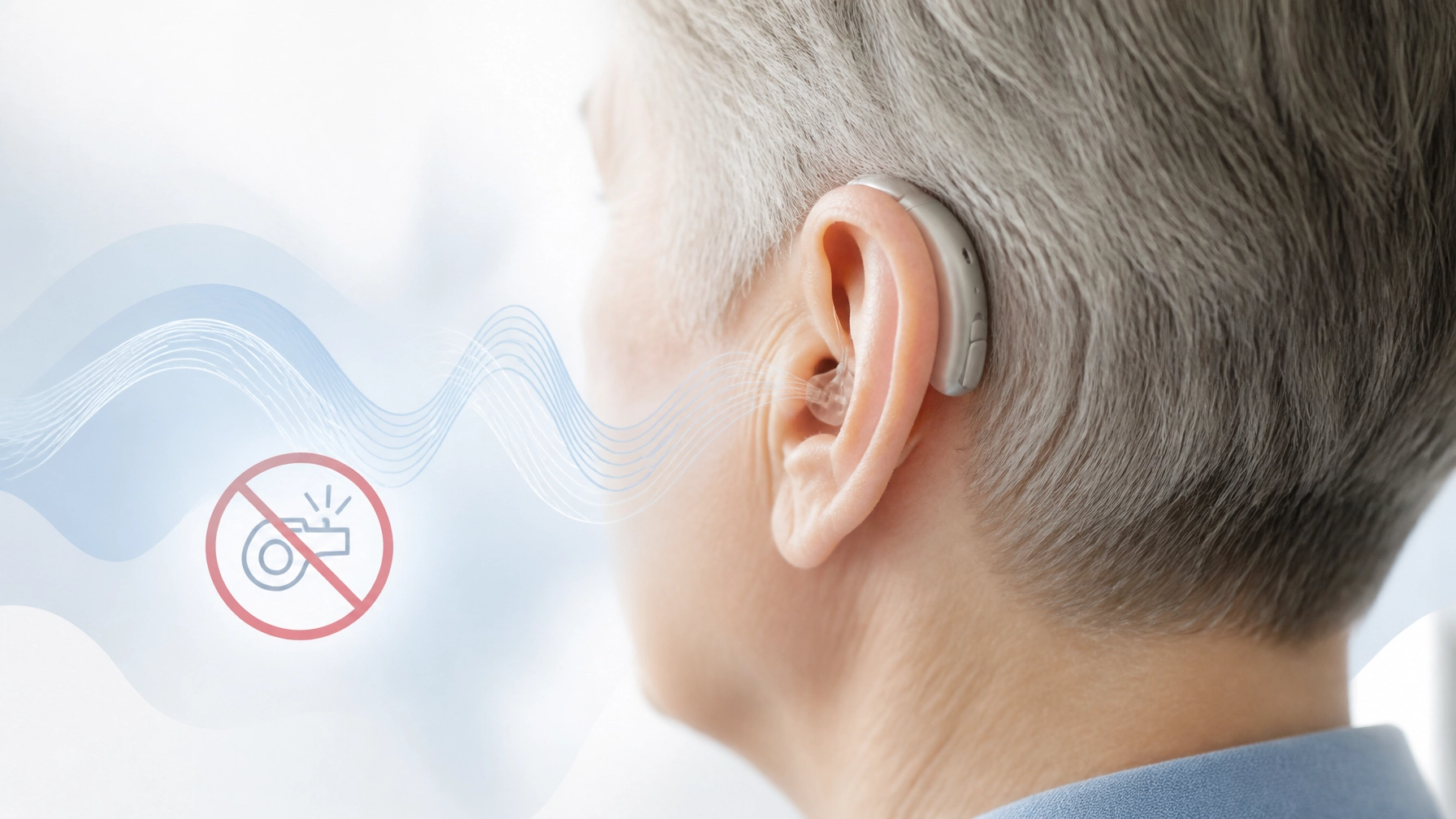
Why Is My Hearing Aid Whistling? 7 Causes of Feedback (and How to Fix It)
If your hearing aid is whistling, squealing or making a high-pitched chirping sound, you are hearing feedback. Feedback occurs when amplified sound escapes from your ear, travels back into the hearing aid microphone and is amplified again.
It creates a loop:
- Your hearing aid amplifies sound.
- Some of that sound leaks out of your ear.
- The microphone picks it up again.
- The hearing aid amplifies it once more.
- You hear a whistle or squeal.
A brief whistle when you put your hearing aid in, hug someone or adjust a hat can be normal. Constant or sudden feedback is not something you should simply put up with. It usually means the device needs cleaning, refitting, adjustment or repair.
I see this regularly with my patients at Pristine Hearing Perth. In many cases, the cause is simple to fix. Here are the seven most common reasons hearing aids whistle, plus the practical steps to take.
1. Your earmould or hearing aid does not fit properly
A hearing aid needs to sit securely in your ear. If there is a gap between the device and your ear canal, amplified sound can escape and return to the microphone.
This can happen when:
- Your earmould has become loose.
- Your ear has changed shape over time.
- The hearing aid is not inserted fully.
- The earmould has become worn.
- Weight changes have altered the way the device sits.
- The aid shifts when you chew, talk or move your jaw.
How to fix a poor fit
- Remove and reinsert the hearing aid exactly as your audiologist showed you.
- Gently press the earmould or device into place. If the whistling stops, the fit is likely the problem.
- Check for visible gaps around the earmould.
- Ask your audiologist to check the fit and seal.
- If required, arrange a new earmould, shell or fitting adjustment.
One patient I’ll call Margaret from Nollamara noticed that her hearing aid whistled whenever she looked down to read. The device had gradually loosened and was moving out of position. After a fit adjustment and a new earmould, the feedback stopped.
Practical takeaway: If pressing the hearing aid gently makes the whistle disappear, book a fit check rather than simply turning the volume down.
2. Wax is blocking your ear canal
A build-up of earwax, also called cerumen, can cause hearing aid feedback. When wax blocks the ear canal, amplified sound cannot travel normally. Instead, it reflects back towards the hearing aid and microphone.
Earwax can also make your hearing aid feel loose, because the device cannot sit in its intended position.
Look for these signs:
- A blocked or underwater feeling.
- Sudden muffled hearing.
- Earache or discomfort.
- Feedback that began recently.
- More wax on the hearing aid or earmould than usual.
- A hearing aid that sounds weak despite having a fresh battery or full charge.
How to fix earwax-related feedback
- Do not push cotton buds into your ear. They can push wax deeper and irritate the canal.
- Do not pour oils, water or household products into your ear unless a qualified health professional has recommended them.
- Arrange an ear examination with an audiologist or other appropriate healthcare professional.
- If wax is present, ask about professional ear wax removal in Perth.
At Pristine Hearing, we provide professional ear cleaning services, including modern techniques such as micro-suction where appropriate. You can learn more through our ear wax removal service.
Practical takeaway: If whistling is accompanied by a blocked ear or sudden muffled hearing, get your ear canal checked before changing your hearing aid settings.

3. Wax or debris is blocking the microphone or receiver
Your hearing aid has tiny openings that allow sound in and out. The microphone picks up sound, while the receiver is the small speaker that delivers sound into your ear.
Wax, dust, skin particles and moisture can collect around these parts. A blockage may cause:
- Whistling.
- Muffled sound.
- Intermittent sound.
- Reduced volume.
- A device that sounds distorted or weak.
How to fix a blocked hearing aid
- Remove the hearing aid before cleaning it.
- Wipe the outside gently with a clean, dry cloth.
- Use the manufacturer’s cleaning brush as directed.
- Check the wax filter or wax guard.
- Replace a blocked wax filter if you have been shown how to do so.
- Keep the device dry and store it correctly overnight.
- Do not poke pins or sharp objects into the microphone or receiver.
If you are not sure which part is blocked, bring the device in for a professional clean and check. My team can inspect hearing aids from many brands and providers, not only devices originally fitted at our clinic.
Practical takeaway: Never assume a whistling hearing aid needs replacing. A professional clean may solve the problem quickly.
4. The tubing is loose, cracked or hardened
Behind-the-ear hearing aids may use tubing to connect the device to an earmould. Over time, tubing can become:
- Hard.
- Brittle.
- Discoloured.
- Loose at the connection points.
- Cracked or split.
- Too short because it has shrunk.
Even a tiny crack can allow sound to leak and contribute to feedback. Hardened tubing may also pull the earmould out of position.
How to fix damaged tubing
- Inspect the tubing in good light.
- Look for cracks, stiffness, gaps or discolouration.
- Do not try to glue the tubing yourself.
- Ask your audiologist about mould retubing.
- Replace the tubing when it has become hard, damaged or loose.
Mould retubing is a straightforward maintenance service, but it needs to be done accurately so the earmould sits comfortably and the sound reaches your ear correctly.
Practical takeaway: If you use a behind-the-ear device and the tubing looks old or stiff, professional retubing may stop the whistle and improve comfort.
5. The volume is set too high
Turning up the volume can sometimes make speech easier to hear. However, excessive volume increases the amount of amplified sound around your ear, making feedback more likely.
This is especially common when someone:
- Increases the volume to compensate for blocked wax.
- Uses an incorrect hearing aid program.
- Has experienced a change in hearing.
- Needs the hearing aid reprogrammed.
- Keeps raising the volume because speech still sounds unclear.
How to fix excessive-volume feedback
- Reduce the volume slightly.
- Check whether the whistling stops.
- Try your usual listening program.
- If you constantly need a high volume, book a hearing assessment and hearing aid adjustment.
- Ask your audiologist to check the programming and physical fit.
Do not simply accept that you must use uncomfortable volume levels. Your hearing aid should provide useful amplification without constantly squealing.
Practical takeaway: Lowering the volume may provide temporary relief, but frequent high-volume use means your settings and hearing should be reviewed.
6. The hearing aid shell is damaged
A hearing aid shell is the outer casing that protects the internal electronics. Depending on the style, it may be custom-made to fit inside or behind your ear.
A damaged shell can create feedback if it:
- Has a crack.
- Has a loose seam.
- No longer seals correctly.
- Has been damaged by moisture or impact.
- Allows the microphone or receiver to move.
- Has become uncomfortable and is no longer sitting in the correct position.
How to fix a damaged shell
- Check the device for cracks, splits or loose sections.
- Stop wearing it if the damage causes pain or exposes internal components.
- Keep it away from water and avoid household glue.
- Arrange a professional inspection and hearing aid repair in Perth.
In some cases, a shell can be repaired. In others, replacing the shell or device is the safest and most cost-effective solution. I provide my patients with a clear explanation and a free, instant quote before proceeding with treatment.
Practical takeaway: Never open the hearing aid casing yourself. Internal components are delicate, and DIY repairs can turn a minor repair into a full replacement.
7. The dome is the wrong size
A dome is the soft silicone tip fitted to some receiver-in-the-canal and slim receiver hearing aids. It sits in the ear canal and helps deliver sound comfortably.
If the dome is too small, it may not seal the ear properly. If it is too large, it may be uncomfortable or fail to sit in the correct position. Both situations can contribute to whistling.
How to fix an incorrectly sized dome
- Note whether the feedback happens in one ear or both.
- Check whether the dome feels loose, painful or unstable.
- Do not force a larger dome into your ear.
- Ask your audiologist to test different dome sizes and styles.
- Have the hearing aid programming checked after changing the dome.
One of my patients, whom I’ll call David from Scarborough, had a new pair of receiver-in-the-canal hearing aids that whistled whenever he smiled. The device itself was working properly, but the dome was too small for his ear. After we fitted a better size and checked the programming, he could wear the aids comfortably without the repeated squeal.
Practical takeaway: The correct dome is a balance between comfort, stability and acoustic sealing. It is not always the biggest dome.

When should you see a Perth audiologist?
Make an appointment if:
- Your hearing aid whistles continuously.
- Feedback began suddenly and does not stop.
- The device whistles even after cleaning and reinsertion.
- You notice a crack, loose tubing or damaged shell.
- Your ear feels blocked or painful.
- Your hearing has changed.
- You are constantly turning the volume up.
- The hearing aid becomes uncomfortable.
- The device is still whistling after you change the dome or wax filter.
What happens at a hearing aid repair appointment?
At Pristine Hearing Perth, I can work through the problem step by step:
- Inspect your ear for wax, irritation or other visible issues.
- Check the hearing aid fit and how it sits in your ear.
- Clean the microphones, receiver and other accessible parts.
- Inspect tubing, domes, earmoulds and the outer shell.
- Check whether the programming and volume are suitable.
- Recommend a refit, retubing, repair or replacement if needed.
- Explain the cost before work begins.
We offer hearing aid repairs for many device types, including aids fitted by other audiologists. Our services include clean and check, emergency repairs, mould retubing and full replacements where required.

Final checklist: stop the whistle before it becomes a bigger problem
When your hearing aid starts whistling, do these things first:
- Remove and reinsert it correctly.
- Turn the volume down slightly.
- Check the dome, earmould and tubing.
- Clean the device only as instructed.
- Do not use cotton buds deep in your ear.
- Arrange professional ear wax removal if your ear feels blocked.
- Book a clean, refit or repair if the problem continues.
A whistling hearing aid is frustrating, but it is usually fixable. Do not put up with feedback or leave your device in a drawer. Contact Pristine Hearing Perth for specialist audiology care, hearing aids in Perth, and practical hearing aid repair support.
You can call (08) 6336 7170 or email info@pristinehearing.com.au. With the right check and adjustment, bob’s your uncle( you can get back to hearing comfortably.)