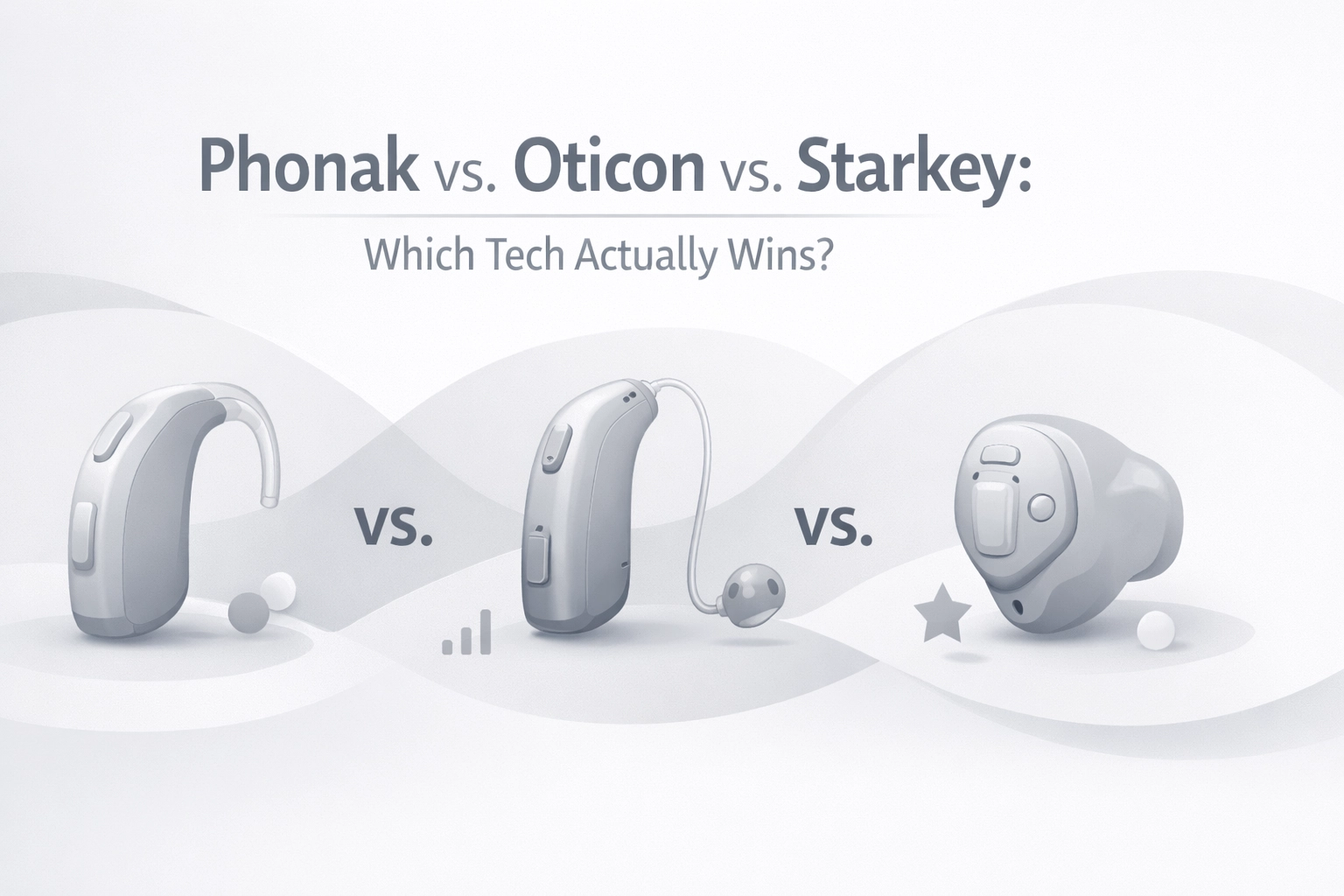
Phonak vs. Oticon vs. Starkey: Which Tech Actually Wins?
Choosing a hearing aid in 2026 feels a bit like picking a smartphone ten years ago: every brand claims they’ve got the "world’s first" something-or-other, and the marketing jargon is enough to make your head spin. As an independent audiologist at Pristine Hearing, I get asked the same question at least five times a day: "Which one is actually the best?"
The truth is, there isn't a single "winner" that suits every ear in Australia. However, there are massive differences in how Phonak, Oticon, and Starkey approach the problem of hearing loss. Because we aren't owned by a manufacturer (unlike many of the big retail chains you see in shopping centres), I have the freedom to tell you exactly where these devices shine and where they fall short.
In this deep dive, I’m going to break down the heavy hitters: the Phonak Infinio, the Oticon Intent, and the Starkey Edge AI. We’ll look at connectivity, sound philosophy, and those fancy AI features that everyone is talking about.
Why My Independent Perspective Matters to You
Before we get into the tech, you need to understand the "Big Six" manufacturers. Most hearing clinics in Australia are owned by the people who make the hearing aids. For example, if you walk into an Audika, you’re likely being guided toward an Oticon. At Bay Audio, it’s often Resound or Westone.
I don't play that game. At Pristine Hearing, I look at your lifestyle, your audiogram (the graph showing your hearing thresholds), and your dexterity before recommending a brand. Do not settle for a clinic that only offers one or two brands. You deserve the full spectrum of choice.
Round 1: Connectivity and the Bluetooth Battle (Phonak’s Territory)
If you are a tech-head or someone who spends half their day on a mobile phone, Phonak has historically been the king of the mountain.
The Phonak Infinio Edge
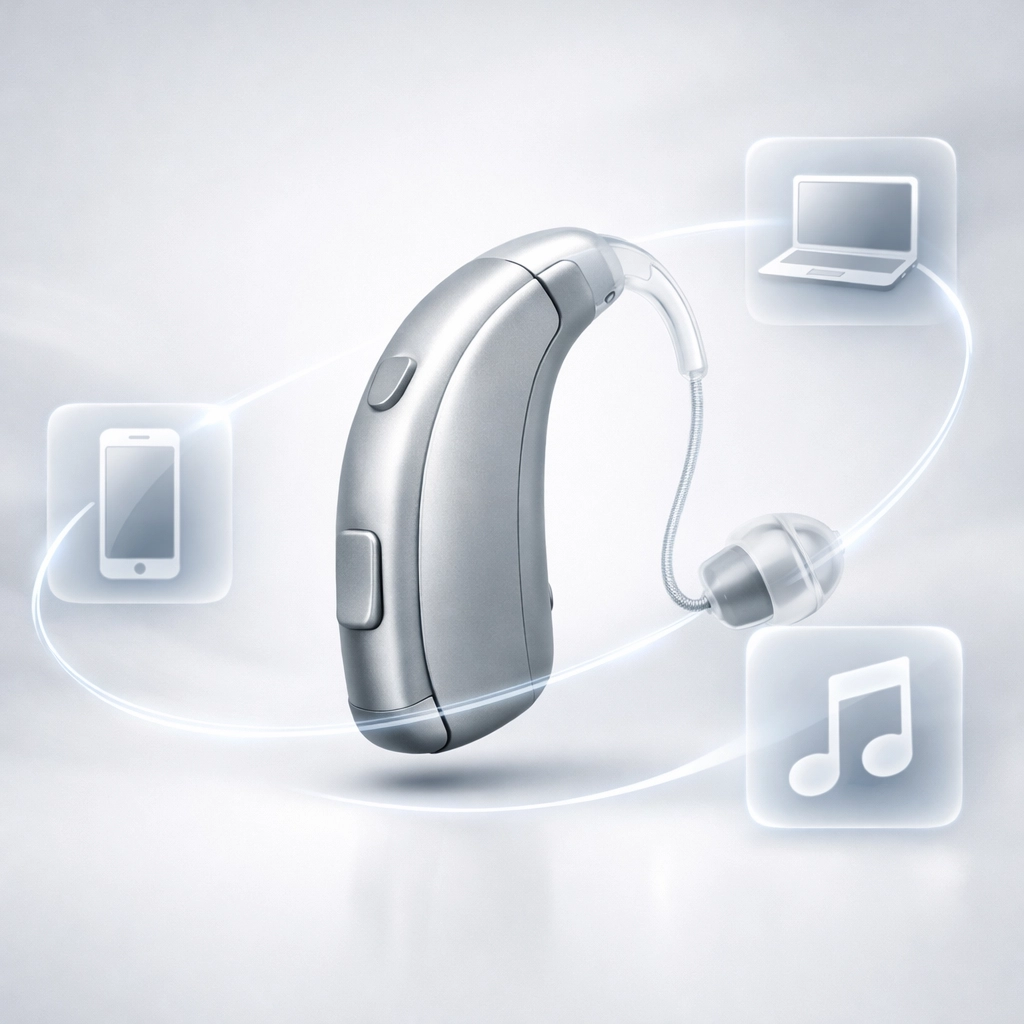
Phonak uses a proprietary chip that allows for "Universal Connectivity." While most hearing aids are "Made for iPhone" (MFi), Phonak connects to virtually anything with Bluetooth: including old Android phones, laptops, and even some smart TVs.
- Dual-Chip Power: The new Infinio platform uses a dedicated AI chip (the ERA chip) alongside their main processor. This means the hearing aid doesn't have to choose between processing sound and maintaining a stable Bluetooth connection.
- Truly Hands-Free: You can answer a call by tapping your ear, and the hearing aid microphones pick up your voice. You don't even need to take your phone out of your pocket. Bob's your uncle: it just works.
- Stability: I’ve found with my patients that Phonak tends to have the least "drop-outs" when streaming music or podcasts.
The Competition: Oticon and Starkey
Oticon and Starkey have traditionally relied on the MFi (Made for iPhone) protocol. However, in 2026, they have both embraced Bluetooth LE Audio and Auracast.
- Auracast is a game-changer. It’s a new technology that allows you to "tune in" to audio broadcasts in public places like airports, cinemas, or gyms.
- The Catch: While Starkey and Oticon are future-proofed with Auracast, Phonak’s current "Classic Bluetooth" approach makes them more compatible with older tech right now.
Practical Summary: If you have an Android phone or want the most stable connection to your PC, get your Audiologist to demo the Phonak Infinio. If you want to be ready for the future of public broadcasting (Auracast), Oticon or Starkey might be the better bet.
Round 2: Sound Philosophy and 4D Sensors (Oticon’s Philosophy)
Every manufacturer has a different "brain" logic. Some want to cut out all noise; others want to give you the whole world.
Oticon Intent and the 4D Sensors
Oticon’s philosophy is "BrainHearing." They believe the brain needs access to the full soundscape to work naturally.
- 4D User-Intent Sensors: This is the "secret sauce" in the Oticon Intent. These sensors track your head movement, body movement, and conversation activity.
- How it works: If you are standing still and someone is talking, the aids focus forward. If you start moving your head around in a busy restaurant, the aids realise you’re trying to take in the whole table and they "open up" the microphones.
Real-World Example: I recently saw a patient, Margaret, who felt "trapped" by her old hearing aids because they cut out too much background noise, making her feel isolated. We switched her to the Oticon Intent, and she loved that she could hear the birds in the park while still following her husband's conversation.
Phonak’s Spheric Speech Clarity
Phonak takes the opposite approach. They use a massive Deep Neural Network (DNN) trained on 22 million sound samples to aggressively strip away noise.
- They claim a 10 dB improvement in Signal-to-Noise Ratio (SNR).
- In plain English: They make the voice you want to hear much louder than the clattering of plates in a cafe.
Practical Summary: If you want a natural, open sound, go for Oticon. If you struggle immensely in high-noise environments and just want the noise gone, Phonak’s Spheric tech is the current leader.
Round 3: AI Integration and Health Tracking (Starkey’s Edge)
Starkey, an American company, has pivoted hard into the "Healthable" space. They don't just see a hearing aid as a speaker; they see it as a wearable health tracker.
The Starkey Edge AI
Starkey’s AI is incredibly fast, making up to 80 million adjustments per hour.
- Fall Detection: This is a huge one for my older patients. If you have a tumble, the hearing aids can detect the impact and automatically text your emergency contacts with your GPS location.
- Wellness Tracking: Through the "My Starkey" app, it tracks your steps, your active minutes, and even how many hours you’ve spent engaging in social conversation (which is vital for preventing cognitive decline).
- Edge Mode+: With a double tap, the AI scans the environment and instantly optimizes the sound for that specific moment. It’s like having a tiny audiologist living inside your ear.

Case Study: Barry from Perth. Barry is in his late 70s and lives alone. His daughter was worried about him falling while gardening. We fitted him with the Starkey Edge AI, not just because the sound was great, but because of the fall detection. It gave his family peace of mind, and Barry felt more confident being active.
The Big "Rechargeable" Question: Which Battery Lasts?
Almost all my patients now request a hearing aid rechargeable model. Nobody wants to be fiddling with those tiny size 10 batteries anymore!
- Phonak: Generally offers a solid 16-20 hours of life, even with heavy streaming.
- Oticon: The Intent has a very fast charging cycle. A 30-minute "top-up" can give you an extra 8 hours of use.
- Starkey: Currently holds the title for some of the longest-lasting batteries in the premium category, often pushing 30+ hours on a single charge.
Pro Tip: Always ask about the "portable charger" option. Some chargers have an internal battery (like a power bank) that allows you to charge your aids on the go without being plugged into a wall.
What About the Telecoil?
You might hear the term Telecoil (or T-Coil) and think it’s old-fashioned. While it’s been around for decades, it is still incredibly useful in Australia.
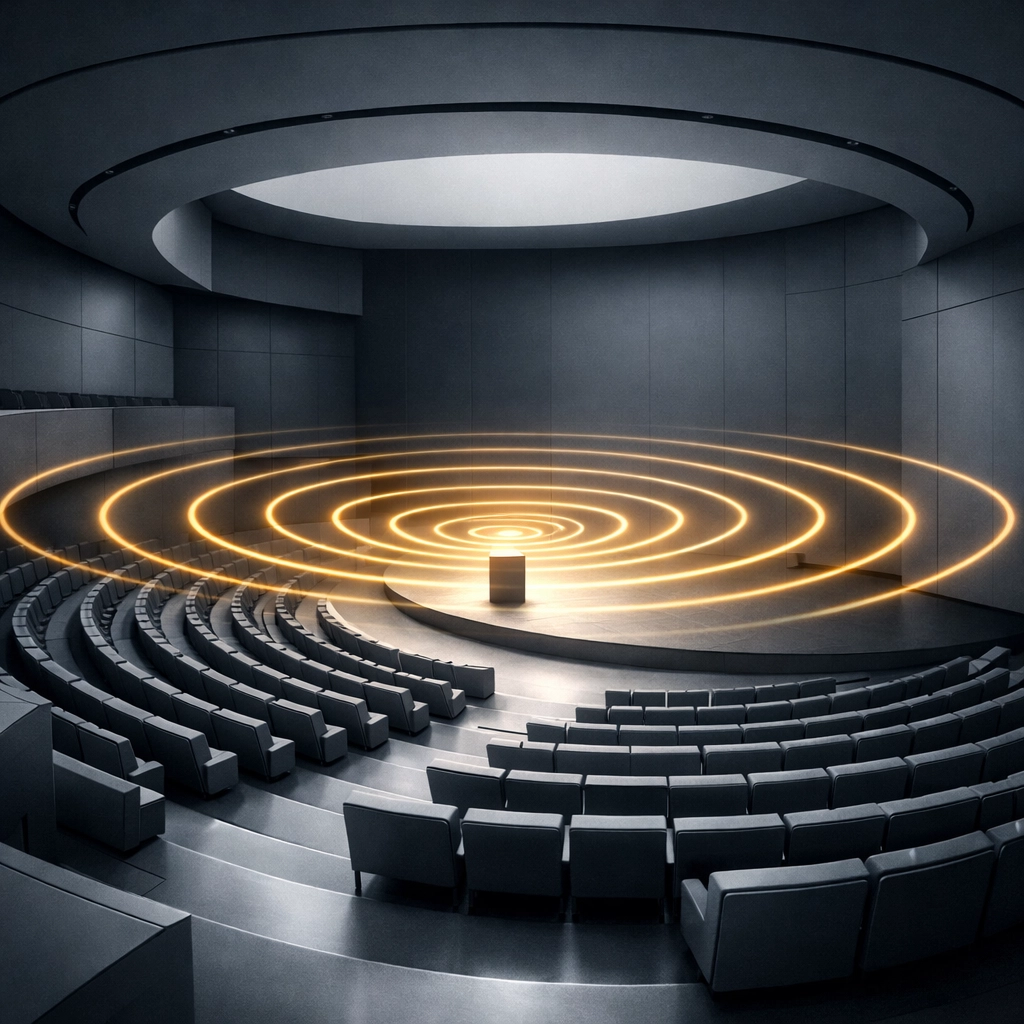
- What is it? It’s a small copper wire inside the aid that picks up electromagnetic signals from "Loop Systems" in churches, theaters, and some government buildings.
- Do you need it? If you frequent places with loop systems, make sure you request the T-Coil version. Most manufacturers offer it, but it often makes the hearing aid slightly larger.
Step-by-Step: How to Choose the Winner for YOU
Don't just take a manufacturer's brochure at face value. Follow these steps to ensure you get the right tech:
- Get a Comprehensive Assessment: Start with a full diagnostic hearing test. You can't fit a square peg in a round hole.
- Identify Your "Must-Haves": Is it fall detection? Is it Android connectivity? Is it the smallest possible size?
- Request a Trial: Any reputable independent audiologist (like us!) should offer a no-obligation trial period.
- Test in the "Real World": Take those trial aids to your local noisy cafe, your grandkids' birthday party, or the cinema. That’s the only place the tech truly proves itself.
- Check the Funding: Make sure to check if you are eligible for the Hearing Services Program (HSP) or private health insurance rebates. We can help you navigate the paperwork to funding options.
The Verdict: Who Wins?
Now that we have looked at the features, let's wrap this up. There is no overall "winner," but there is a winner for specific needs:
- The Connectivity Winner: Phonak Infinio. For the person who wants their hearing aids to talk to every device they own without a fuss.
- The Sound Quality Winner: Oticon Intent. For the person who wants the most natural, open soundscape and spends a lot of time in dynamic social situations.
- The Lifestyle & Safety Winner: Starkey Edge AI. For the person who wants to track their health, prevent falls, and use AI to "boost" their hearing on demand.
Keep reading this post as we explore… actually, why don't you come in and hear the difference for yourself?
Choosing hearing aids is a big investment in your quality of life. Make sure you choose an independent provider who isn't biased toward one brand. At Pristine Hearing, we’re here to help you navigate the "tech wars" and find the perfect fit for your ears and your lifestyle.
Ready to hear what you’ve been missing? Contact us today to book a consultation and trial the latest from Phonak, Oticon, or Starkey. No pressure, no "hard sell": just expert advice from people who care.
Quick Takeaway Summary
- Phonak: Best for Android users and heavy noise reduction.
- Oticon: Best for "natural" brain-based hearing and 4D intent.
- Starkey: Best for health tracking and fall safety features.
- Independence Matters: Only an independent clinic can give you an unbiased comparison of all three.
- Rechargeability: Most premium models now last 20-30 hours per charge.
Don't let a sales pitch dictate your hearing. Get the facts, try the tech, and decide for yourself!