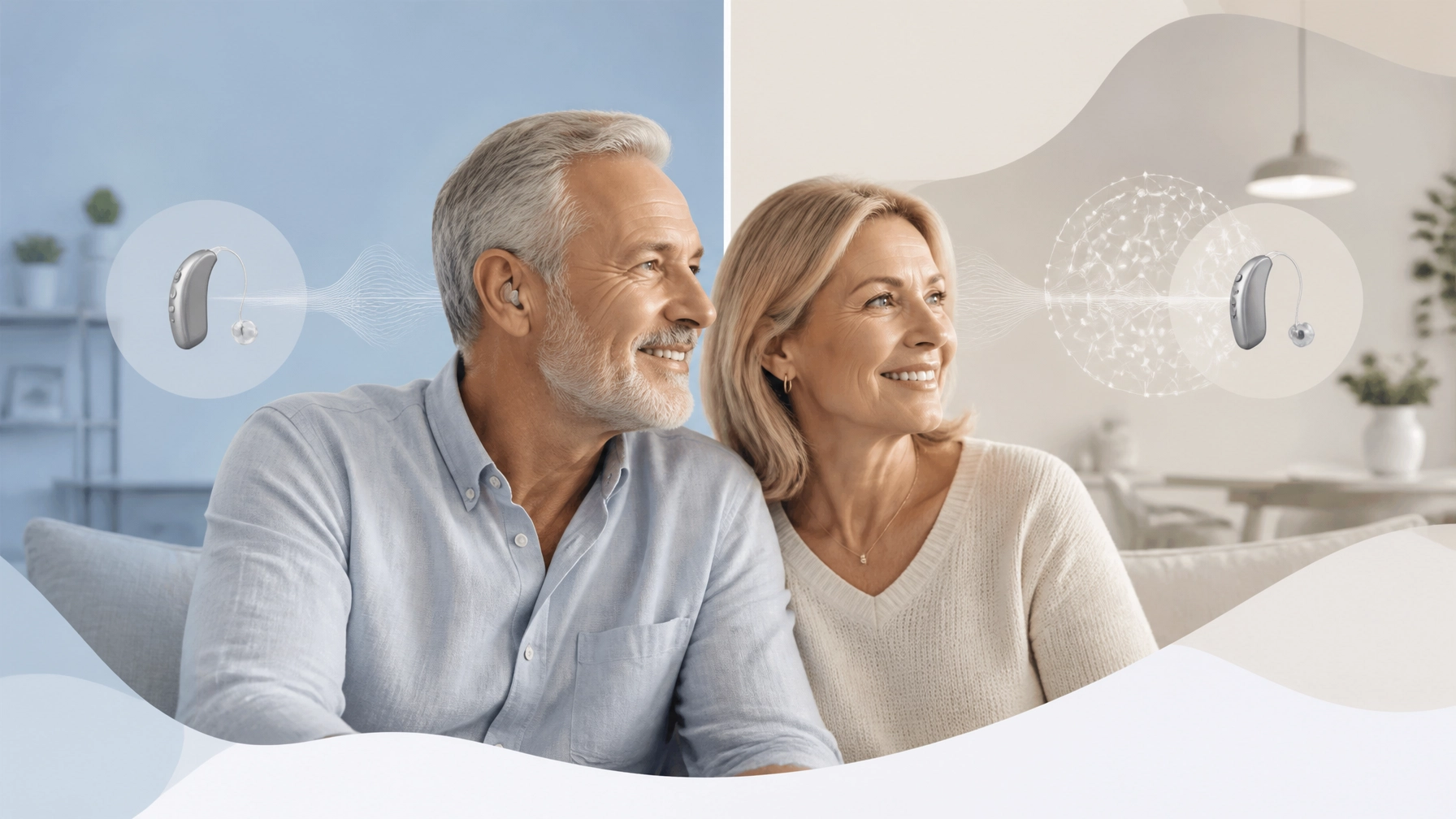
AI Hearing Aids vs Regular Hearing Aids: Which Is Actually Worth Your Money in Perth?
If you are comparing hearing aids in Perth, you have probably noticed that “AI-powered” technology is everywhere in 2026. Oticon Reveal’s new Dual AI, ReSound Sensia and Starkey’s AI platforms are being promoted as the next big step in hearing care.
But here is my straight-talking answer:
AI hearing aids can be worth the extra money if you regularly struggle in background noise, attend social events or want the devices to make more decisions automatically. However, a well-fitted regular digital hearing aid can still provide an excellent result, particularly if you mainly have one-to-one conversations in quieter environments.
The most expensive hearing aid is not automatically the best hearing aid for you. The right match depends on your hearing test, lifestyle, comfort preferences, dexterity, technology needs and budget.
The short answer: AI or regular hearing aids?
Choose AI hearing aids if you:
- Find restaurants, cafés and family gatherings difficult
- Work in meetings or open-plan offices
- Become mentally tired from concentrating on conversations
- Want your hearing aids to adapt automatically
- Prefer advanced smartphone controls and streaming
- Would benefit from features such as enhanced speech focus or health tracking
Consider regular digital hearing aids if you:
- Mostly talk with one person in quiet surroundings
- Want a simpler device with fewer features
- Are comfortable adjusting the volume occasionally
- Need to keep the purchase price lower
- Qualify for subsidised hearing services and do not need premium extras
My practical takeaway: Do not pay for AI simply because the label sounds impressive. Ask your audiologist to demonstrate the difference in the places where you actually struggle. If the improvement is meaningful to you, bob’s your uncle : the premium may be justified.

What is the difference between AI and “regular” hearing aids?
Both types are digital hearing aids. They use microphones to pick up sound, a processor to modify it and a receiver (the tiny speaker that delivers sound to your ear).
The difference is mainly in how the processor analyses and responds to sound.
Regular digital hearing aids
A regular hearing aid typically uses:
- Amplification matched to your hearing loss
- Directional microphones
- Noise reduction
- Feedback management (technology that reduces whistling)
- Automatic programs for settings such as quiet, speech or noise
- Optional Bluetooth and smartphone connectivity
These devices are not “dumb”. Modern regular hearing aids can make thousands of adjustments and provide very natural sound when professionally fitted.
AI hearing aids
AI hearing aids use additional machine learning or a deep neural network (DNN). A DNN is software trained using large libraries of speech and environmental sounds so the device can recognise patterns in real time.
AI technology may help the hearing aid:
- Analyse whether the sound around you is speech, traffic, wind or general background noise.
- Separate a speaker’s voice from competing sounds.
- Adjust directionality and noise reduction automatically.
- Preserve useful environmental sounds while reducing distractions.
- Reduce the need for manual program changes.
Important: “AI” is also a marketing term, so you need to ask what the technology actually does. Some devices use machine-learning-trained sound processing, while others use more advanced on-device AI to separate speech from noise continuously.
AI hearing aids vs regular hearing aids: a practical comparison
| Feature | Regular digital hearing aids | AI hearing aids |
|---|---|---|
| Speech in quiet | Usually very effective | Usually very effective |
| Speech in noise | Directional microphones and noise reduction help | More advanced speech and noise analysis may provide extra clarity |
| Automatic adjustments | Available, but often based on set rules | More responsive environmental adaptation |
| Manual control | May require occasional volume or program changes | Often designed to reduce manual adjustments |
| Listening fatigue | May improve hearing effort | May provide additional support in complex environments |
| Battery use | Varies by model and streaming | Advanced processing and streaming may affect battery life |
| Smartphone features | Available on many models | Common in premium models, but not guaranteed |
| Cost | Generally lower to mid-range | Usually carries a higher technology premium |
| Best suited to | Simpler listening needs and quieter environments | Active lifestyles and difficult listening environments |
The biggest potential advantage is not hearing every sound louder. It is hearing the sound you want more clearly.
Where AI may make the biggest difference
1. Busy restaurants and cafés
In a noisy restaurant, your brain is trying to follow one voice while filtering cutlery, music, kitchen noise and nearby conversations.
AI processing may help by:
- Identifying speech patterns
- Reducing competing background noise
- Focusing microphones towards the person you are facing
- Smoothing changes as the environment gets louder or quieter

2. Family gatherings
Large family gatherings are difficult because speakers may be located beside or behind you. No hearing aid can make every conversation effortless, but advanced processing may make it easier to follow the main speaker.
I tell my patients to combine the technology with good communication habits:
- Ask people to face you when speaking
- Move away from loud televisions or kitchens
- Sit with your back to a wall where possible
- Use a remote microphone if recommended
- Tell family members that clear communication is a shared responsibility
3. Meetings and open-plan workplaces
AI hearing aids may be particularly useful when several people speak at once or when there is constant air-conditioning and office noise.
However, do not assume AI alone will solve workplace communication problems. Your audiologist may recommend a remote microphone system, which sends a speaker’s voice directly to your hearing aids.
4. Less button-pushing
Some of my patients want excellent hearing without having to remember which program to select. AI devices are designed to adapt automatically, which can be helpful if you have reduced dexterity, poor eyesight or simply prefer simplicity.
You do not need a smartphone to use most AI hearing aids. They should still function with their programmed settings, although an app may provide extra controls and streaming.
What about Oticon Reveal, ReSound Sensia and Starkey?
The best model depends on your hearing profile and what is available through your local provider. Here is what the current technology is designed to offer.
Oticon Reveal Dual AI
Oticon describes Oticon Reveal as using two AI systems simultaneously:
- Speech AI: designed to identify and enhance speech
- Context AI: designed to preserve awareness of meaningful surrounding sounds
That approach aims to avoid making the world sound unnaturally narrow or switched off. Oticon Reveal is a new 2026 platform, so ask your Perth audiologist about local availability, technology levels, fitting options and trial arrangements.
ReSound Sensia
ReSound Sensia is a 2026 premium family built around AI processing and deep neural network denoising.
ReSound highlights:
- Automatic sound-environment analysis
- Speech enhancement in noise
- Bluetooth LE Audio
- Auracast compatibility on supported models
- Rechargeable and custom hearing-aid styles
Because product launches can occur at different times in different countries, confirm Australian availability before choosing Sensia based on overseas information.
Starkey Genesis AI
Starkey Genesis AI includes an onboard DNN (deep neural network), Edge+ Mode for challenging listening situations and, on suitable models, wellness and safety features through the My Starkey app.
Depending on the model, Starkey’s technology may also include:
- Activity and step tracking
- Fall detection and alerts
- Direct audio streaming
- Rechargeable designs
- Discreet receiver-in-canal and custom styles
These extra features are useful for some people, but they should not distract from the basics: clear sound, physical comfort, reliable battery life and proper fitting.
Are AI hearing aids worth it for pensioners in Perth?
If you are searching for hearing aids for pensioners in Perth, start by checking whether you qualify for the Australian Government’s Hearing Services Program.
Eligible people may receive subsidised hearing assessments, hearing aids and ongoing services. A Pensioner Concession Card or qualifying DVA card may provide a pathway, but eligibility rules and device choices apply.
You may be offered:
- A fully subsidised hearing-aid option
- Partially subsidised premium devices
- Ongoing maintenance and follow-up services
- Assistance understanding your available funding
A premium AI model may involve an additional payment, depending on the program and provider. Never assume that “AI” means you must pay privately, and never assume that the most advanced model is automatically included.
Pristine Hearing can help you understand your options through its funding assistance service, including private health insurance, Medicare-related information, DVA and other funding pathways.
Two common patient situations
The following examples are composite scenarios based on the types of situations I regularly discuss with patients. Names and details have been changed to protect privacy.
Margaret, 74: mostly quiet conversations
Margaret spends most of her time at home, speaking with her daughter, watching television and attending small morning teas. Her main concern is hearing soft speech, not managing loud restaurants.
After a hearing assessment, a reliable mid-range digital hearing aid may be the sensible choice. She does not need to pay for health tracking, advanced streaming or the most powerful noise-management system.
For Margaret, comfort, easy controls and dependable aftercare matter more than the AI label.
Daniel, 58: restaurants and work meetings
Daniel works in an open-plan office and regularly meets clients in cafés. He hears reasonably well at home but loses important parts of conversations in background noise. He also feels exhausted after a full day of listening.
For Daniel, I would arrange a direct comparison between a premium AI hearing aid and a good regular model. If he notices clearer speech and less listening effort in his real-world situations, the technology premium may be worthwhile.
The key is testing the devices, not choosing from a brochure.
Follow these five steps before buying
-
Book a comprehensive hearing assessment.
Your hearing loss pattern determines the power, style and processing you need. -
Write down your three hardest listening situations.
Include restaurants, family gatherings, work meetings, driving or television. -
Ask for an AI-versus-regular demonstration.
Get your audiologist to compare technology levels using speech-in-noise testing and real-world examples. -
Check the complete cost.
Ask about fitting, follow-up appointments, batteries or chargers, repairs, warranty and funding. -
Prioritise aftercare.
A hearing aid is only as good as its programming and ongoing maintenance. Pristine Hearing provides free follow-up maintenance on Pristine Hearing aids, helping you get lasting value from your investment.

My honest verdict
AI hearing aids are worth the money when your real problem is hearing speech in complex, noisy environments and you want maximum automatic support.
Regular digital hearing aids are worth the money when your needs are simpler, your budget is tighter or you mainly communicate in quiet settings.
Do not choose based on the word “AI” alone. Choose based on your hearing test, your lifestyle and the difference you can hear for yourself.
If you are comparing hearing aids in Perth, book a free hearing test or contact Pristine Hearing. I can help you compare suitable technology levels, understand your funding options and work out whether AI genuinely adds value for your ears and your everyday life.