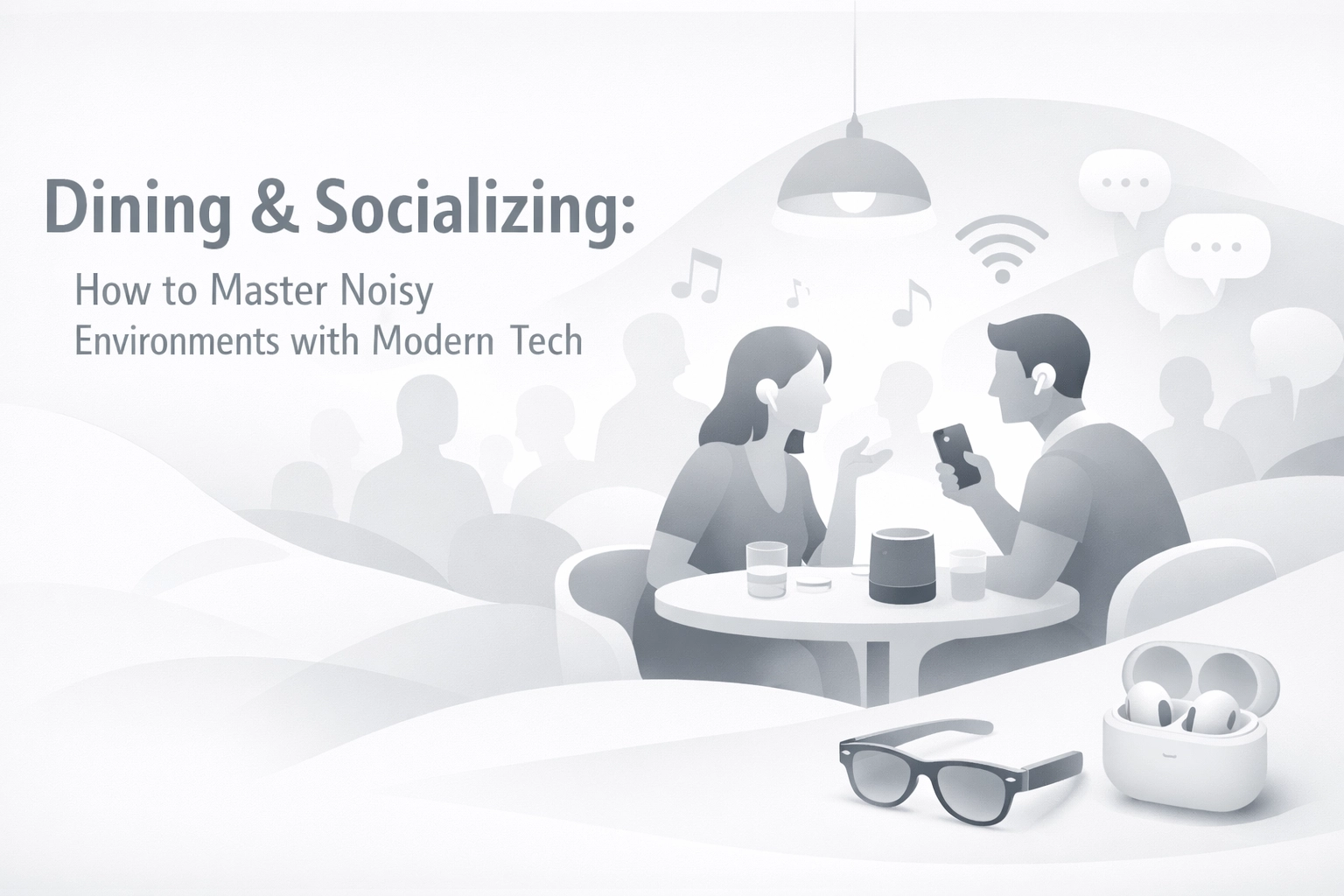
Dining & Socializing: How to Master Noisy Environments with Modern Tech
Let’s be honest: there is nothing more frustrating than heading out for a nice dinner at a bustling Perth bistro, only to spend the entire night nodding and smiling because you can’t hear a word your friends are saying. I see this every single week in my clinic. Patients come in telling me they’ve started turning down dinner invites or avoiding Sunday sessions at the local pub because the background noise is just too much. It’s called social isolation, and it’s a real kick in the teeth for your quality of life.
But here’s the good news: we are living in 2026, and the tech available to us now is absolutely world-class. Gone are the days of "trumpet" style hearing aids that just made everything louder (including the clattering of forks and the espresso machine). Today, we have sophisticated tools designed specifically to help you thrive in noise.
In this post, I’m going to walk you through exactly how to master those noisy environments so you can get back to enjoying your social life without the stress.
The Secret Weapon: Directional Microphones (Beamforming)
If you’ve got modern hearing aids, you already have a powerhouse of technology sitting on your ears. The most important feature for dining out is Directional Microphones.
Most high-end hearing aids today use what we call Narrow Directionality or Beamforming (a technology that uses multiple microphones to create a 'beam' of focus toward the person speaking in front of you while suppressing noise from the sides and back).
Here is how I explain it to my patients: Imagine your hearing aids are like a spotlight. In a quiet room, that spotlight is wide, taking in everything. But the moment you walk into a noisy restaurant, the hearing aid's processor detects the "noise floor" (the constant hum of background chatter) and narrows that spotlight right onto the person sitting across from you.
How to use this feature effectively:
- Face your conversation partner directly. If you turn your head away, the "beam" follows your nose, not your ears.
- Ask your Audiologist to set up a "Speech in Loud Noise" program. This is a dedicated setting you can toggle to manually when things get hairy.
- Use the app. Most brands have an app that lets you manually narrow or widen that beam. If you’re at a table of six, widen it. If it’s just a romantic dinner for two, narrow it right down.

Your Smartphone: The Best Accessory You Already Own
A lot of people don’t realise that their smartphone is actually a sophisticated remote microphone. Whether you use an iPhone or an Android, there are built-in features that can save your night.
Apple’s "Live Listen" is a game-changer. You can literally turn your iPhone into a microphone. You place the phone on the table near the person you want to hear, and it streams their voice directly into your hearing aids via Bluetooth. Bob’s your uncle: suddenly that person sounds like they are standing right next to you.
For my patients on Android, you’ve got the "Sound Amplifier" app. It works in a similar way, filtering and boosting the frequencies of speech while dampening the clatter of the kitchen.
Do not be shy about using this. I once had a patient named Barry who was terrified of looking "techy" at the dinner table. I told him, "Barry, would you rather look like you’re checking your messages for two seconds, or would you rather spend two hours feeling left out?" He gave it a burl, and now he won’t go to the RSL without his phone "Live Listen" active.
Strategic Seating: The "Audiology Power Move"
Technology is incredible, but a little bit of old-school strategy goes a long way. When you’re booking a table, you need to be proactive. Don’t just take whatever table the host gives you.
My top tips for seating strategy:
- Back to the noise: Always try to sit with your back to the loudest part of the room (like the bar or the kitchen). This allows your hearing aid’s rear-facing noise cancellation (the tech that identifies and reduces sounds coming from behind you) to work at its maximum potential.
- Look for soft surfaces: Avoid the trendy industrial-style places with concrete floors and high metal ceilings. Sound bounces off those like a pinball. Look for carpet, curtains, or booths.
- Booth over table: A high-backed booth acts as a natural acoustic shield. It blocks sound from the rest of the restaurant and keeps your conversation contained.
- Avoid the "Zone of Death": This is usually the table directly under a large air conditioning vent or right next to the speakers playing "chill lounge" music.
If you're struggling to understand why some environments are harder than others, it's worth checking out our page on hearing loss to see how different frequencies affect speech clarity.
The "Socializing Protocol": Step-by-Step for a Stress-Free Night
I tell my patients to follow this simple checklist before they even leave the house. If you do these four things, you’re already 90% ahead of the game.
- Check your charge: If you have rechargeable hearing aids, make sure they’re at 100%. Processing noise takes more battery power than sitting at home.
- Clean your wax guards: A tiny bit of earwax can block the microphone ports, which are essential for noise cancellation. If the mics are blocked, the tech can’t "hear" the noise to cancel it out.
- Confirm the venue: Use apps like "SoundPrint." It’s like Yelp but for noise levels. It tells you the decibel (dB) levels of restaurants so you can pick a "quiet" one.
- Arrive early: Getting there 10 minutes before the rush allows your brain to habituate (get used to) the environment before it gets too crowded.
Real-World Case Study: Sheila’s 70th Birthday Bash
Sheila came to see me last year. She was dreading her 70th birthday dinner at a popular wharf-side restaurant in Hobart (which, let’s be honest, are basically echo chambers). She was worried she wouldn’t hear her grandkids.
We did three things:
- We updated her hearing aid firmware to the latest 2026 AI-driven processing.
- I gave her a Partner Mic (a small clip-on microphone that her husband wore).
- We practiced using her phone app to adjust the Digital Noise Reduction (the algorithm that identifies the difference between speech and "unwanted" sound).
After the party, she told me it was the first time in a decade she didn’t leave a party with a "hearing headache." She was able to focus on the grandkids because the tech did the heavy lifting for her.
If you're worried about the cost of this kind of tech, there are top ways to fund a hearing aid in Australia that many people overlook.
Modern Restaurant Tech: It’s Not Just You!
Interestingly, restaurants are starting to realize that "loud" doesn't always equal "cool." New acoustic engineering is hitting the hospitality industry.
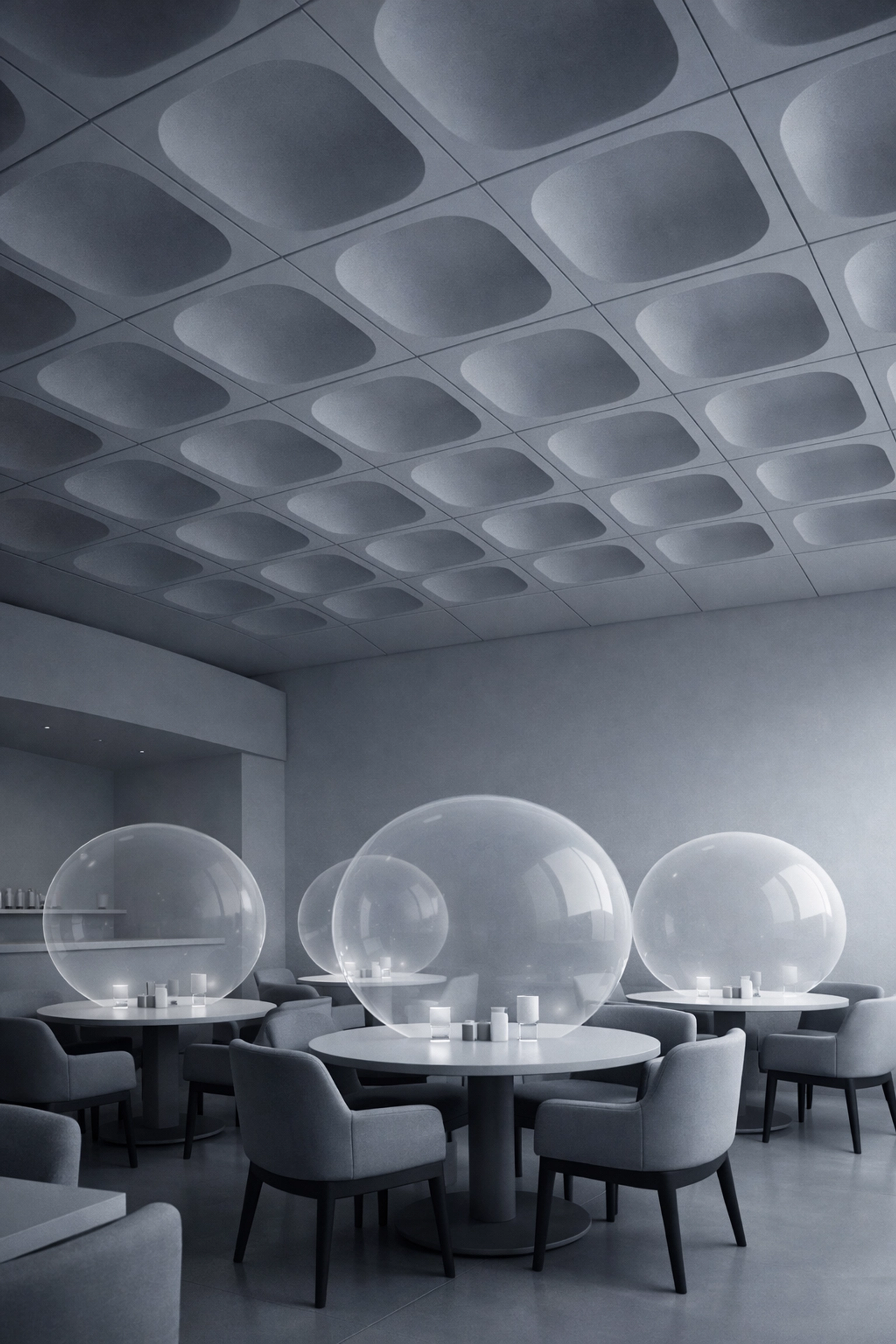
Some high-end venues are now installing acoustic coffered ceilings (ceiling systems designed to absorb sound) and localized acoustic bubbles. This tech uses microphones and speakers at individual tables to reinforce the voices at that table while canceling out the noise from the table next door.
So, if you feel like you’re struggling, remember that even people with "perfect" hearing find these places difficult! You aren't "broken"; you just need the right tools for the environment.
Summary Checklist for Your Next Outing
- Book a booth or a table in a corner away from the kitchen.
- Sit with your back to the noise to help your directional mics.
- Use your remote mic or phone app (Live Listen/Sound Amplifier).
- Face the speaker directly to ensure the "beam" is locked on.
- Don't wait until you're frustrated to switch programs: do it as soon as you sit down.
If you’re still finding that you’re "missing out" even with these tips, it might be time for a tune-up or a professional consultation. We can look at your specific settings and see if we can "tighten up" those noise-reduction algorithms for you.
Feel free to contact us or come see us at our Devonport clinic if you’re in Tasmania. We’re here to help you get back to the table and back to the conversation.
Now that you've got the tech and the strategy sorted, why not give it a burl this weekend? Your social life will thank you for it!