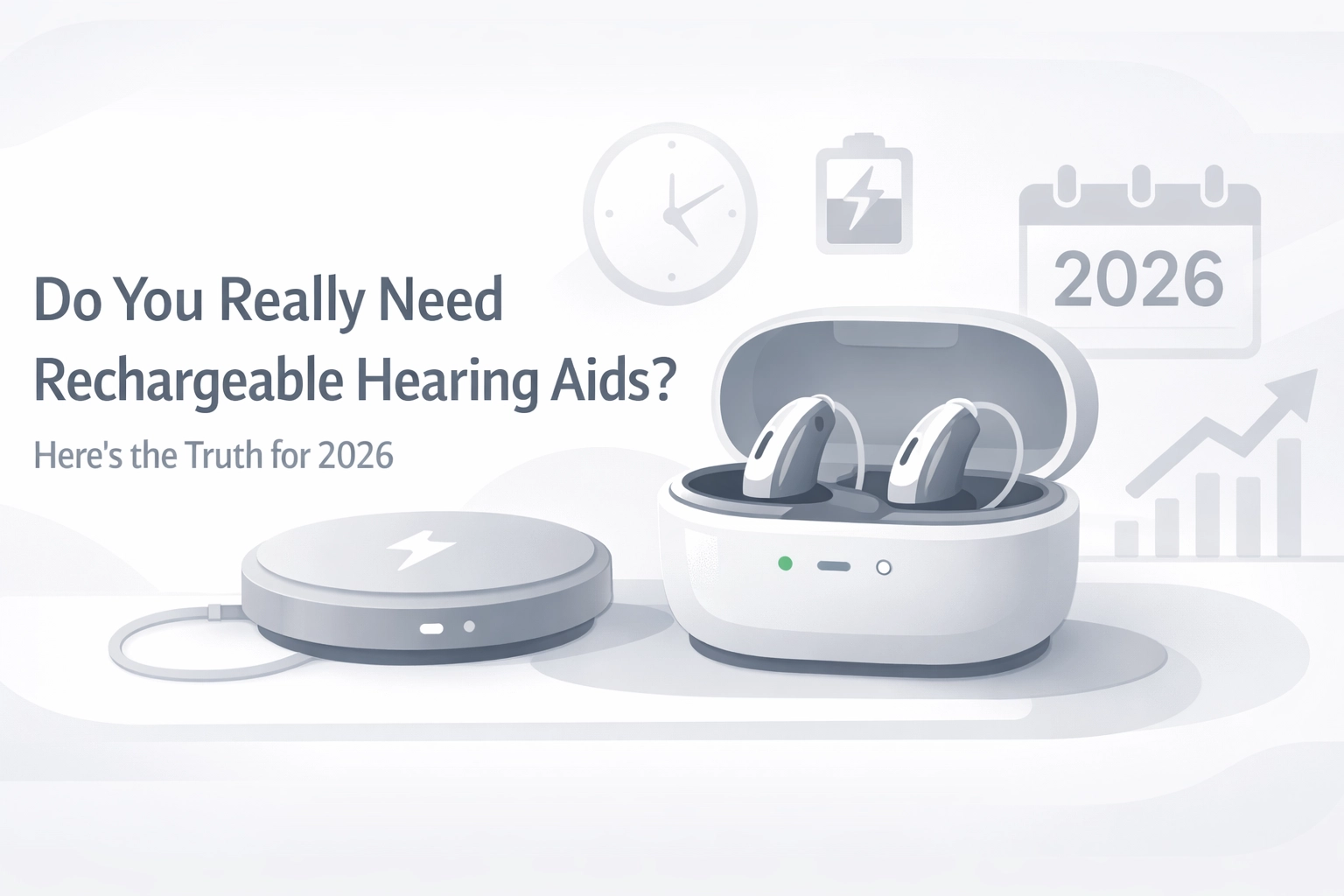
Do You Really Need Rechargeable Hearing Aids? Here’s the Truth for 2026
G’day! It’s Michael here from Pristine Hearing. If you’ve stepped into our clinic or given us a buzz lately, you’ll know that the landscape of audiology has shifted faster than a Perth seabreeze. We are firmly in 2026, and the number one question I get from my patients is: "Michael, do I really need a hearing aid rechargeable model, or am I just buying into the hype?"
It’s a fair dinkum question. For decades, we were all used to those tiny, fiddly zinc-air batteries that came in those little orange or brown packets. But today, the hearing aid rechargeable market has exploded, and nearly 90% of the new tech we fit in the clinic uses internal lithium-ion batteries.
In this post, I’m going to pull back the curtain on the pros and cons. I’ve seen thousands of patients navigate this choice, and while I’m a huge fan of the new tech, it isn’t a "one-size-fits-all" scenario. Let’s dive into the truth about rechargeable tech in 2026.
The Death of the "Fiddle Factor"
If you’ve ever tried to change a size 10 hearing aid battery (the tiny yellow ones) in a dimly lit restaurant while your hands are a bit shaky, you know exactly what I mean by the "fiddle factor."
One of my long-term patients, Arthur from Cottesloe, is a classic example. Arthur is 84 and has a bit of arthritis in his fingers. He loved his old "disposable" aids, but he was constantly dropping those tiny batteries on the carpet. Once they’re in the shag pile, they’re gone for good!
When we switched him to a hearing aid rechargeable set, his life changed. Now, he just drops them into a magnetic charging cradle at night, and Bob’s your uncle, they are ready to go by breakfast.
Why Dexterity Matters:
- No tiny doors: Rechargeable aids are often sealed units. There’s no battery door to snap off or get stuck.
- Magnetic docking: Most chargers are "inductive" (they charge through contact or proximity without needing to be plugged into a tiny port).
- Automatic On/Off: Most rechargeable aids turn themselves on the moment you take them out of the charger.
My Professional Advice: If you struggle with fine motor skills or your eyesight isn't what it used to be, do not waste your time with disposables. The frustration simply isn't worth it.
Powering the 2026 Lifestyle: Streaming and Connectivity
In 2026, hearing aids aren’t just for hearing the person across the table. They are high-tech "hearables." We use them for:
- Direct Streaming: Taking phone calls directly into your ears.
- TV Connection: Sending the nightly news audio straight to your aids via Bluetooth.
- Real-time Translation: Some of my patients use apps that translate foreign languages directly into their ears while travelling.
All of this "extra" work requires juice. Traditional disposable batteries are great for steady amplification, but they can struggle with the "peak" power demands of constant Bluetooth streaming.

I’ve found that a hearing aid rechargeable model handles these power spikes much more efficiently. Most modern lithium-ion batteries in 2026 will give you 24 to 30 hours of use on a single charge, even if you spend half the day streaming music or podcasts.
Takeaway: If you are a tech-savvy user who wants to link your aids to your iPhone or Samsung, make sure to go rechargeable. You’ll find that disposable batteries might only last 2 or 3 days with heavy streaming, which becomes an expensive and annoying habit very quickly.
The Economics: Is It Actually Cheaper?
Let’s talk money. Australians love a bargain, and many patients worry that the higher upfront cost of a hearing aid rechargeable system is a "tax" on convenience.
Here is how the math usually works out over a 5-year period (the typical lifespan of a device):
Disposable Battery Costs:
- Price: Roughly $1 per battery.
- Usage: If you have two ears, you're using two batteries every 5-7 days.
- Total: You’re looking at about $100–$150 per year in batteries alone. Over 5 years, that’s $500 to $750.
Rechargeable Costs:
- Price: Usually adds about $300–$400 to the initial cost of the pair (including the charger).
- Maintenance: The internal lithium battery may need a "refresh" after 4 years, which some manufacturers do for a small fee or under warranty.
- Total: Even with the higher entry price, you often break even by year three.
Pro Tip: If you are eligible for Government Funding, check if your subsidy covers the "rechargeable" upgrade. Many pensioner schemes now recognise that rechargeable tech is the standard and will help cover the gap.
Reliability: What Happens if the Power Goes Out?
This is the biggest "con" I hear from my patients. "Michael, what if I go camping in the Outback and there’s no power?" or "What if the power goes out in Perth during a summer storm?"
It’s a valid concern. With disposable batteries, you just keep a spare packet in your glovebox and you’re sorted. With a hearing aid rechargeable model, you are tethered to the grid, or are you?
In 2026, most manufacturers offer portable power bank chargers. These are small cases that hold 3 to 4 full "on-the-go" charges without needing to be plugged into a wall.
My "Camping Test" for Patients:
- Step 1: Do you regularly spend more than 3 days away from a power source?
- Step 2: If yes, can you remember to charge a power bank before you go?
- Step 3: If you are a true "off-the-grid" adventurer, we might actually suggest a disposable battery model as a backup or primary device.
Do not buy rechargeables if you are notorious for forgetting to charge your mobile phone. If your phone is always at 2% battery, your hearing aids will be too!
Safety and the Environment
We can’t ignore the "green" factor. In Australia, we are becoming much more conscious of what goes into our landfills. Traditional hearing aid batteries are tiny, but when you consider millions of users throwing away a pair of batteries every week, that’s a mountain of heavy metal waste.
Beyond the environment, there is a huge safety benefit for families with grandkids or pets.
Button batteries are incredibly dangerous if swallowed. They can cause catastrophic internal burns in a matter of hours. Because hearing aid rechargeable units are sealed, there is no risk of a curious toddler or a cheeky Labradoodle finding a "shiny snack" on the coffee table.

How to Decide: A Step-by-Step Guide
If you’re sitting on the fence, follow this simple checklist I developed for my clinic:
- Assess Your Hands: Can you pick up a grain of rice easily? If no, Get Rechargeable.
- Check Your Gadgets: Do you enjoy streaming audio/calls? If yes, Get Rechargeable.
- Evaluate Your Routine: Do you have a set "bedtime" where you can leave your aids in a cradle? If yes, Get Rechargeable.
- Consider Your Environment: Do you live in a remote area with frequent power outages? If yes, Consider Disposables.
- Think of the Kids: Do you have young children or grandchildren around? If yes, Get Rechargeable for safety.
Summary of the Truth for 2026
The truth is, hearing aid rechargeable technology has finally matured. In the early days (around 2018-2020), the batteries didn't last the whole day, and the chargers were a bit "hit and miss."
In 2026, those problems are gone. The reliability is through the roof, and the convenience is undeniable. While I still keep a few disposable models in stock for my hardcore bush-walking patients or those who specifically prefer the old-school way, 9 out of 10 people are happier with the rechargeable route.
Get your Audiologist to show you the different charging cases available. Some are tiny and fit in your pocket, while others have built-in dehumidifiers (which help dry out sweat and moisture, perfect for our Perth summers!).

Ready to make the switch?
If you're tired of fumbling with tiny batteries or you're worried your current aids aren't keeping up with your 2026 lifestyle, let’s have a chat. We can run a full diagnostic on your hearing and show you the latest models in person.
- View our services: Adult Hearing Services
- Get a price estimate: Get a Quote
- Book an appointment: Contact Us
Don't let old tech hold you back from hearing the world clearly. Whether you choose rechargeable or disposable, the most important thing is that you’re hearing your loved ones loud and clear.
Stay tuned to our News page for more tips on navigating the world of audiology!
Disclaimer: This information is general in nature. For specific medical advice regarding your hearing loss, please consult a qualified professional. See our full disclaimer for details.