Hearing Test in Perth: What to Expect at Your First Audiology Appointment
I get it. Walking into an audiology clinic for the first time can feel a bit like walking into a dentist’s office when you haven’t flossed in a year. There’s that nagging worry that we’re going to tell you something you don't want to hear, or that the process will be uncomfortable.
But here’s the straight talk from someone who sees patients every day in our Perth clinics: a hearing test is completely painless, non-invasive, and honestly, most of my patients walk out feeling a massive sense of relief. Whether you’ve noticed you’re turning the telly up to "jet engine" levels or your partner is tired of repeating themselves, getting a hearing check in Perth is the first step toward getting your life back.
In this guide, I’m going to walk you through exactly what happens behind those soundproof doors so you can walk in with your head held high. No surprises, no stress: bob’s your uncle!
Why Are You Here? (The Case History)
Before I even look at your ears, we’re going to have a yarn. This is what we call a Case History (a fancy term for a structured chat about your hearing health). I need to understand your "hearing world."
I recently saw a patient, let’s call him Barry from Fremantle. Barry was convinced his hearing was fine, but his wife, Janet, was ready to pull her hair out because he kept missing the punchlines of jokes at the local bowls club. By chatting with Barry, I discovered he’d worked in noisy Perth construction for 30 years without much ear protection. That bit of history is gold for an audiologist.
During this chat, I’ll ask you about:
- Recent noise exposure (Have you been to any loud concerts at RAC Arena or worked with heavy machinery?).
- Family history (Did your old man or mum struggle with their hearing?).
- Specific trouble spots (Do you struggle mostly in noisy cafes or when the grandkids are chirping away?).
- Tinnitus (Do you have any ringing, buzzing, or hissing in your ears?).
- General health (Any history of ear infections or balance issues?).
Expert Tip: Be honest! If you only struggle when your spouse mutters from the kitchen while the tap is running, tell me. It helps me tailor the test to your real-life struggles.
Step 1: Checking the "Plumbing" (Otoscopy)
Now we get physical: but don't worry, it doesn't hurt a bit. I use a tool called an otoscope (a handheld device with a light and a magnifying lens) to peer inside your ear canal.

I’m looking for two things here: blockages and health.
- Ear Wax (Cerumen): Sometimes, the "hearing loss" is just a massive plug of wax sitting against your eardrum. If that’s the case, we can often sort it out right then and there with our ear wax removal services.
- Physical Health: I’m checking to see if your eardrum looks healthy, if there’s any inflammation, or if there are signs of past surgeries.
Do not go to a hearing test if you know you have a massive ear infection or extreme pain. See your GP first. If you’re unsure, give us a buzz, and we’ll guide you on whether to come in or head to the doctor.
Step 2: The "Beep" Test (Pure-Tone Audiometry)
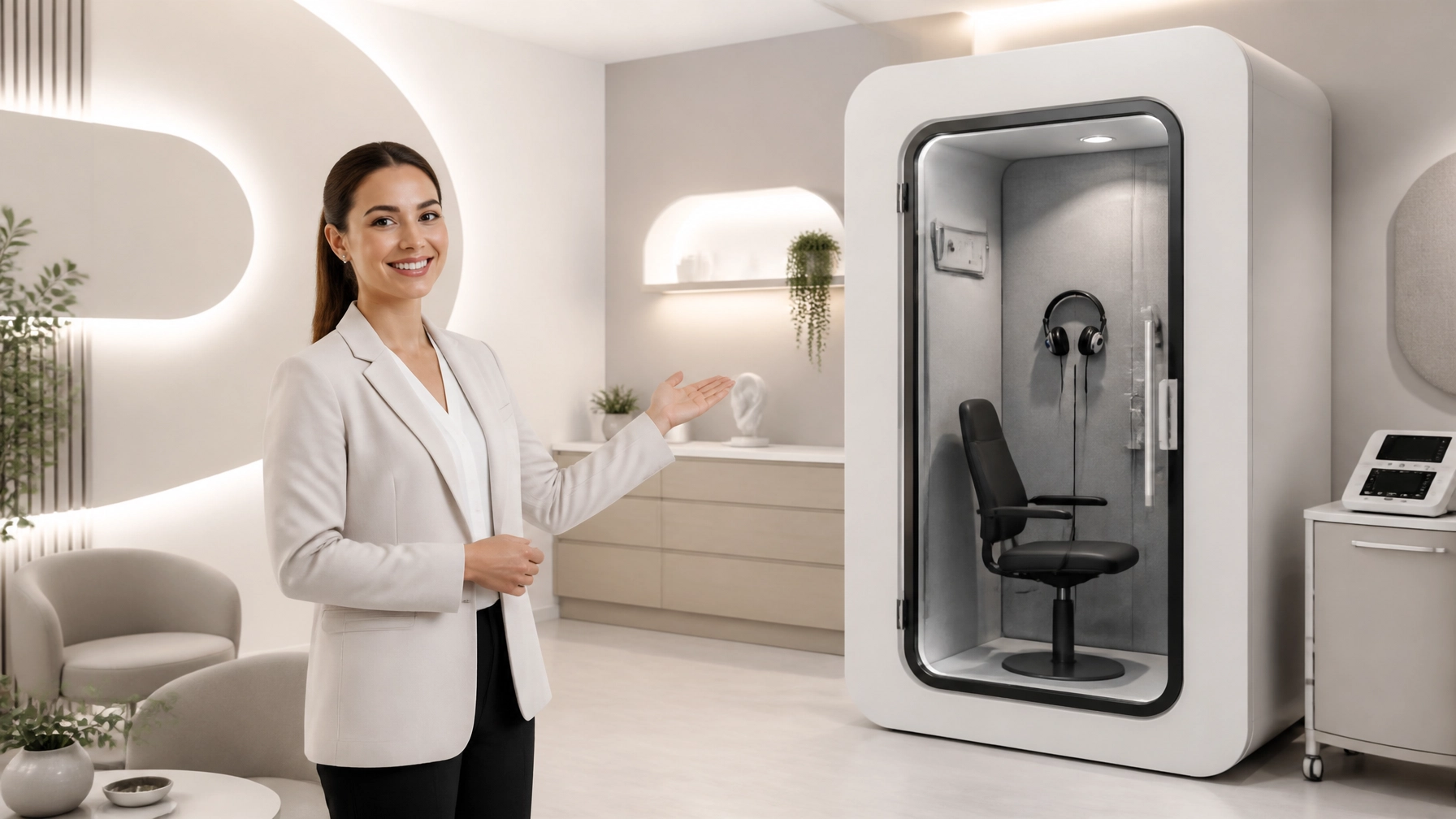
This is the main event. I’ll lead you into a sound-treated booth (a specially designed room that blocks out the Perth traffic noise) and pop a pair of headphones on you.

The process is simple:
- Air Conduction Testing: I’ll play a series of "beeps" or tones at different pitches (frequencies) and volumes.
- Your Job: Every time you hear a sound: even if it’s so faint you think you’re imagining it: you press a button or raise your hand.
- Bone Conduction Testing: I’ll also place a small vibrating headband behind your ear. This bypasses the outer/middle ear and sends sound directly to your inner ear (the cochlea). This tells me if the problem is in the "plumbing" (conductive loss) or the "wiring" (sensorineural loss).
Technical Term Alert: Sensorineural hearing loss (permanent loss caused by damage to the tiny hair cells in the inner ear) is the most common type we see in audiologists Perth clinics.
Step 3: The Pressure Check (Tympanometry)
Next, I’ll place a soft rubber tip in your ear. You’ll feel a slight change in air pressure: sort of like when you’re landing at Perth Airport: and hear a low-pitched hum.
This is Tympanometry (a test that measures how well your eardrum moves).
- Why we do it: It helps us identify if there is fluid behind the eardrum (common after a cold), a hole in the eardrum, or if the tiny bones in your middle ear are moving correctly.
- The Result: It produces a graph called a tympanogram. If the peak is flat, we might refer you to an ENT (Ear, Nose, and Throat specialist). You can read more about GP referrals here.
Step 4: Talking the Talk (Speech Testing)
Hearing "beeps" is one thing, but understanding your mates at the pub is another. That’s why we do Speech Testing.
I’ll play a series of words through the headphones, and you simply repeat them back to me.
- Speech Reception Threshold (SRT): The softest level at which you can recognize speech.
- Word Recognition Score: How clearly you can understand words when they are played at a comfortable volume.
Real-world example: I once had a patient, Margaret from Subiaco, who could hear the "beeps" perfectly but scored quite low on speech testing. This told me that her brain was getting the sound, but it wasn't "decoding" it properly: a classic sign that hearing aids could help her brain re-learn those sounds.
Step 5: The Verdict (Reviewing Your Results)
Once the tests are done, we sit down and look at your audiogram (a graph that shows the softest sounds you can hear at different frequencies).

I will explain:
- Degree of Loss: Is it Mild, Moderate, Severe, or Profound?
- Type of Loss: Is it permanent or something a doctor can fix?
- Impact: How this explains why you struggle in restaurants or with soft voices.
Make sure to ask your audiologist for a copy of your results. It’s your data! At Pristine Hearing Perth, we believe in total transparency. We’ll discuss whether you need a hearing aid, a simple wax clean, or just a follow-up in a year's time.
Practical Summary: Your Hearing Test Checklist
To make your hearing check in Perth as smooth as possible, follow these steps:
- Bring a "Third Ear": Bring a partner or a friend. They can provide insight into your hearing struggles that you might not even notice.
- Check Your Funding: Many Australians are eligible for subsidies. Check our guide on funding and benefits before you arrive.
- Don't Clean Your Ears: Leave the cotton buds alone! You might push wax further in. Let us handle it safely.
- Prepare Your Questions: Ask about battery life, Bluetooth connectivity, and rechargeable options if hearing aids are recommended.

Ready to take the plunge?
Now that you know exactly what to expect, there’s no reason to put it off. Most of my patients say the same thing after their first appointment: "I wish I’d done this three years ago."
Don't let another family dinner go by where you're just smiling and nodding because you can't hear the conversation. Get your audiologist to give you a comprehensive assessment and get back in the game.
Book your hearing test in Perth today at Pristine Hearing. We're here to help you hear the life you love.