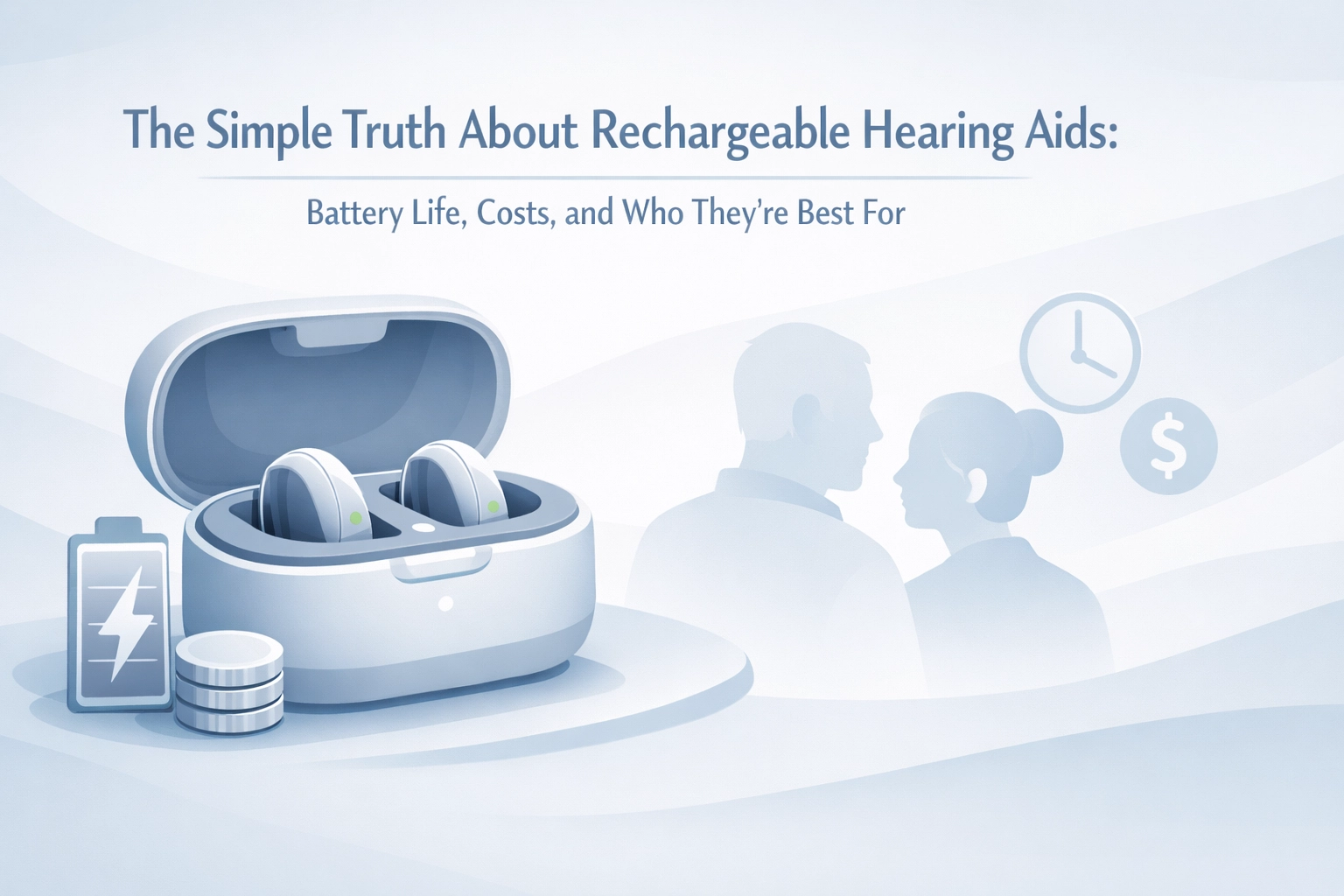
The Simple Truth About Rechargeable Hearing Aids: Battery Life, Costs, and Who They’re Best For
For years, I’ve sat across from my patients in our Perth clinic while they fumbled with tiny, silver-coloured batteries. You know the ones: zinc-air batteries that are roughly the size of a grain of rice and have a habit of rolling under the fridge the moment you try to change them. If you’ve ever felt like you needed the steady hands of a surgeon just to get your hearing aids working in the morning, I have some good news for you.
The industry has shifted. These days, when people ask me about a hearing aid rechargeable option, they aren’t just looking for a gadget; they’re looking for freedom from the “battery tax” and the fiddly bits. But is it all sunshine and rainbows? As your local audiologist at Pristine Hearing, I’m here to give you the straight talk on battery life, the actual costs, and whether these modern marvels are actually the right fit for your lifestyle.
The Lowdown on Battery Life: How Long Will They Actually Last?
One of the first things my patients ask is, “Will it die on me halfway through dinner?” It’s a fair question. Unlike the old disposable batteries that you just swap out when they beep, a rechargeable unit needs to get you through the whole day.
In my experience, most modern rechargeable hearing aids provide between 14 and 51 hours of use on a single charge. That is a massive range, and it depends heavily on the technology level and how much “heavy lifting” the computer inside the aid is doing.
Here is a breakdown of what you can typically expect from the top brands we work with:
- Starkey Genesis AI: These are the marathon runners of the group, offering up to 51 hours on a single charge.
- Signia Models: Usually hit the 38 to 51-hour mark, which is fantastic for weekend trips where you might forget your charger.
- Widex: Offers a very solid 37 hours.
- Standard Models (ReSound, etc.): Typically land between 24 and 30 hours.
Do not assume every aid is the same. If you are a power user who streams music or takes phone calls through your aids all day, that battery life will drop. On average, Bluetooth streaming can shave 1 to 2 hours off your daily runtime.
The Lifespan of the Internal Battery
It is important to understand that the physical battery inside the device: usually a Lithium-ion battery (the same high-density tech used in your smartphone): won’t last forever. You can expect the internal battery to last about 4 to 5 years before it starts losing its “oomph” (capacity). After this point, the battery holds progressively less charge, and you might find it struggling to reach the evening.
Get your Audiologist to check the battery health during your annual review. If it’s starting to fail toward the end of your warranty, we can often send them back to the manufacturer for a refresh, and bob’s your uncle: you’re good for another few years.
Let’s Talk Money: Is the Upfront Cost Worth It?
I’ll be blunt: hearing aid rechargeable models usually cost more upfront than their disposable-battery cousins. Generally, you’re looking at an extra $300 to $500 per pair for the recharging technology and the charging station itself.
However, you need to look at the long-term math. Let’s break it down:
- Disposable Battery Costs: A packet of batteries might cost $5 to $10. If you change them every 5 days, you’re spending roughly $70 to $100 a year per ear.
- Convenience Factor: How much is your time worth? No more driving to the shops because you ran out of batteries on a Sunday night.
- Environmental Impact: Over five years, you’re preventing hundreds of tiny toxic batteries from hitting the landfill.
When you factor in the funding options available in Australia, the price gap often narrows significantly. For many of my patients, the sheer convenience of just dropping the aids into a cradle at night far outweighs the extra couple of hundred dollars spent at the start.
Who Are Rechargeable Hearing Aids Best For?
While I love this tech, it isn’t a one-size-fits-all solution. In my clinic, I recommend rechargeable models specifically for a few types of people.
1. People with Dexterity Issues
If you struggle with arthritis or numbness in your fingers, trying to peel a tiny tab off a size 10 battery is a nightmare. I once had a patient named Arthur from Subiaco who spent ten minutes every morning just trying to get his aids powered up. We switched him to a hearing aid services plan with rechargeable aids, and his frustration vanished instantly. He just drops them in the magnetic charger, and they click right into place.
2. The Tech-Savvy Streamer
If you love watching Netflix on your iPad or taking calls directly through your hearing aids, you are a “power user.” Disposable batteries can drain rapidly under the stress of Bluetooth. Rechargeable aids are designed to handle these high-drain activities much more efficiently.
3. The Environmentally Conscious
If you’re trying to reduce your carbon footprint, this is a no-brainer. One pair of rechargeable aids replaces roughly 600 disposable batteries over its lifetime.
4. The “Set and Forget” Crowd
If you like routine, you’ll love these. You brush your teeth, put your aids in the charger, and go to sleep. When you wake up, they turn on automatically the moment you take them out of the dock.
Introducing the NEW Slim RIC: Where Style Meets Power
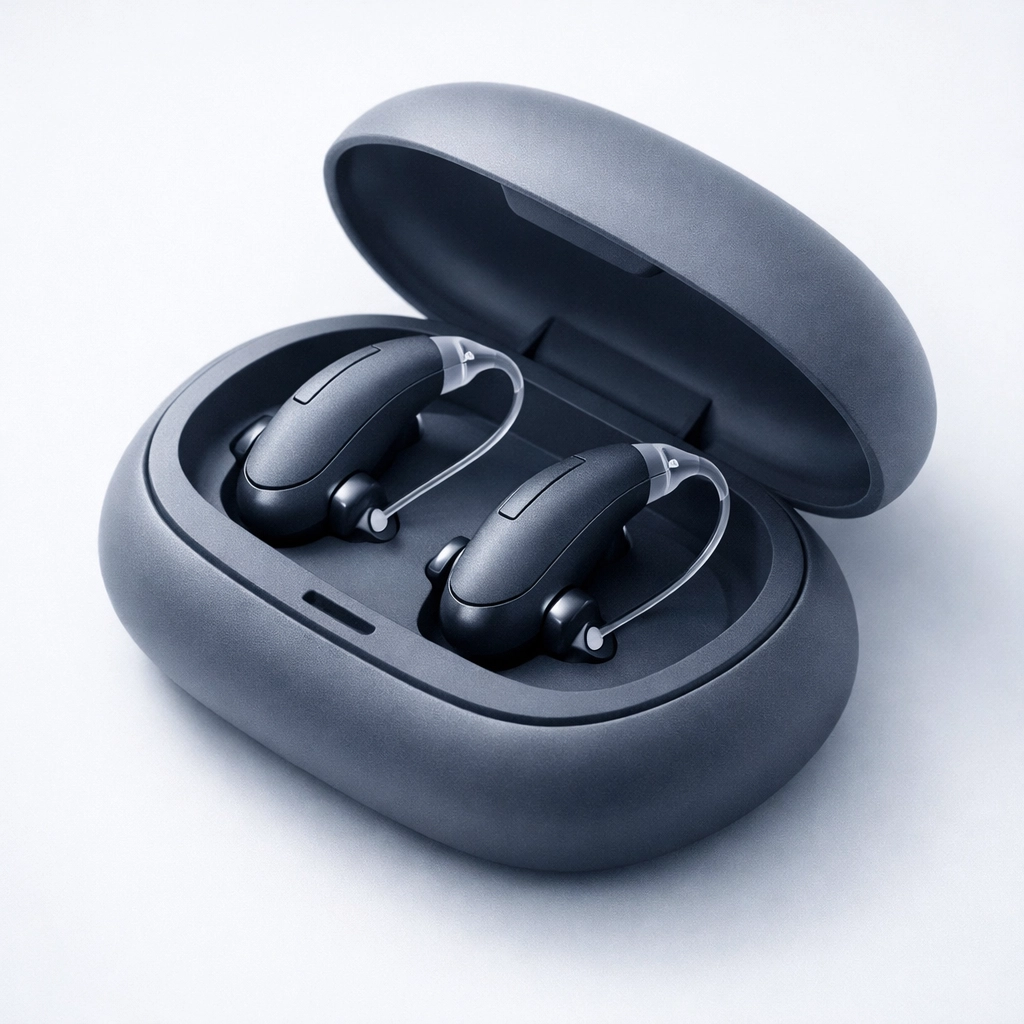
I have to mention the latest trend I’m seeing in Perth: the NEW Slim RIC (Receiver-In-Canal). For a long time, rechargeable aids were a bit… chunky. They had to be, to fit the battery inside.
But the new Slim RIC designs are incredibly sleek. They sit behind the ear almost invisibly and follow the natural curve of your head. They don’t look like “medical devices”; they look like high-end tech. If you’ve been hesitant about hearing aids because you didn’t want something bulky, you really need to see these. We offer expert guidance on these models right here at Pristine Hearing.
A Quick “Pro-Tip” Guide for New Users
If you decide to go rechargeable, follow these steps to make sure you get the most out of your investment:
- Do not leave your charger in a humid bathroom. Steam can damage the charging contacts. Keep it on your bedside table or in a dry area.
- Get a portable “Power Bank” charger. Many brands now offer cases with a built-in battery that can charge your aids 3 or 4 times without being plugged into a wall. This is a lifesaver for camping trips or long flights.
- Clean the gold contacts weekly. Use a dry cloth or the little brush provided to wipe the charging points on the aids and the dock. If dust builds up, they won’t charge properly.
- Ask about “Quick Charge.” Many modern aids can give you 3 hours of use from just a 15-minute charge. This is perfect if you forgot to plug them in and have a lunch date in twenty minutes.
Practical Summary: Should You Make the Switch?
To wrap this up, let’s look at the key takeaways:
- Expect a full day of use: You’ll get 16 to 50+ hours depending on the brand.
- Budget for the upfront cost: It’s more expensive initially but saves money on batteries over 5 years.
- Think about your hands: If you hate small tasks, rechargeables are your best friend.
- Watch the Bluetooth: Heavy streaming will drain the battery faster, so choose a model with a higher capacity if you stream a lot.
If you’re still unsure, don’t guess. Make sure to book a consultation with an independent audiologist who can show you the different brands. At Pristine Hearing, we aren’t tied to one manufacturer, so I can give you the honest truth about which hearing aid rechargeable model actually suits your ear shape and your hearing loss.
Whether you need earwax removal before a fitting or you’re looking for mobile hearing services because you can’t make it into the clinic, we’ve got you covered. Hearing tech has come a long way, and the rechargeable revolution is making life a whole lot easier for thousands of West Australians.
Give us a buzz on 1300 774 282 or pop into the clinic: let’s find the perfect pair for you!