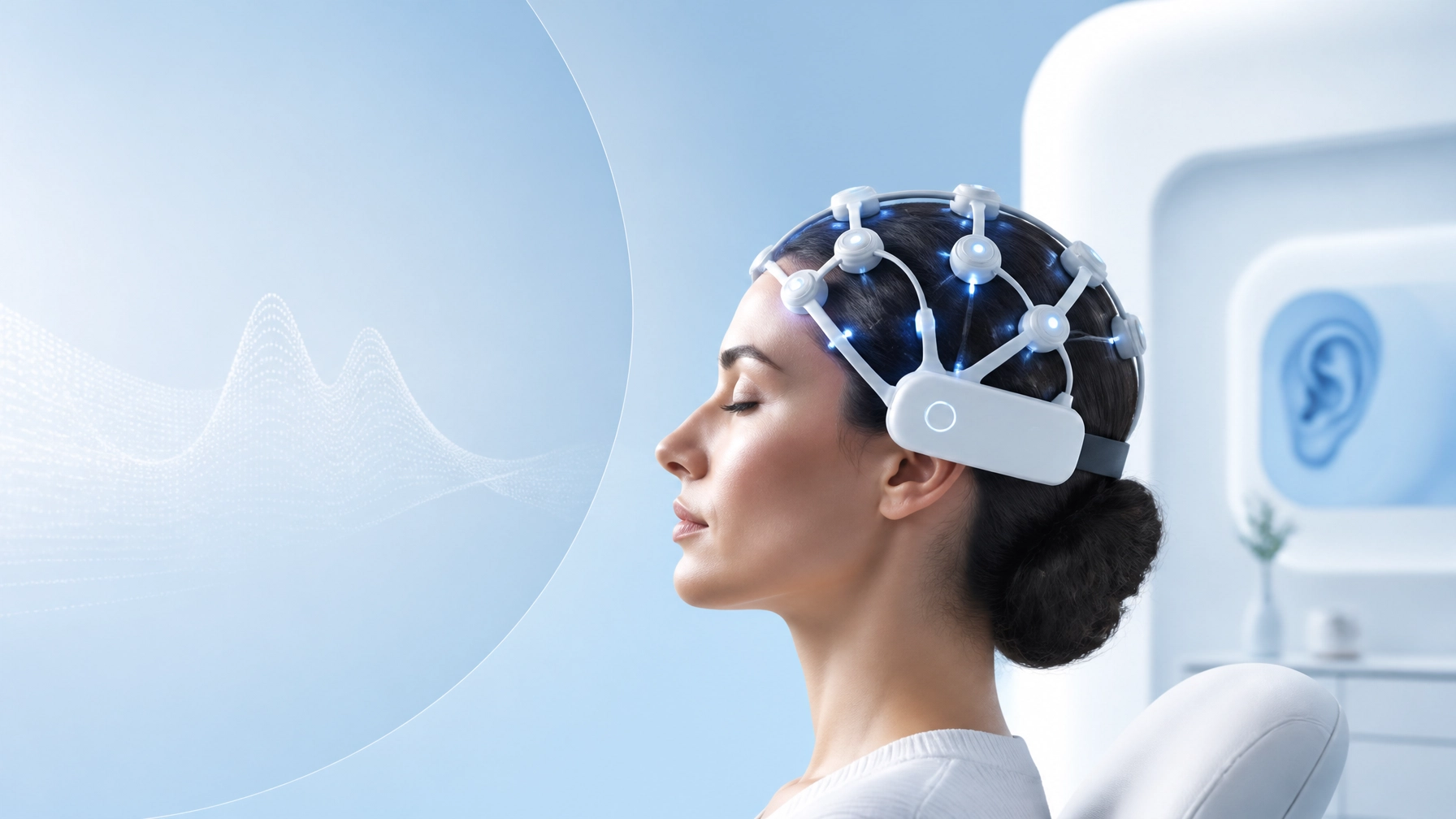
What This New Perth Tinnitus Breakthrough Means for You
If you’ve ever walked into my clinic clutching your head and telling me about the "invisible train" or the "high-pitched whistle" that won't stop, you know exactly how frustrating tinnitus can be. For years, one of the hardest things I’ve had to do as an audiologist is tell my patients that there isn't a simple "blood test" or "X-ray" for tinnitus.
We’ve had to rely on what you tell us. And while I trust my patients implicitly, it’s hard to measure something that only you can hear.
Well, I have some incredible news that’s been buzzing around the Perth audiology community lately. Perth researchers have officially developed a world-first tinnitus diagnostic tool that uses brain activity to "see" your tinnitus. This isn't just a small step; it’s a giant leap for anyone in Western Australia living with that constant ringing.
Now that we have a bit of context, let’s dive into what this breakthrough actually is and, more importantly, what it means for you.
The Science: What is fNIRS?
You might see the term fNIRS popping up in news reports. It stands for Functional Near-Infrared Spectroscopy (a non-invasive brain imaging technique that uses light to measure changes in blood oxygen levels in the brain).
Think of it like this: when a part of your brain is working hard (like the part processing that annoying ringing sound), it needs more oxygen. The fNIRS device shines a tiny, safe light through your scalp, and by looking at how that light bounces back, researchers can actually map out where your brain is "lighting up."
The Perth team has achieved a staggering 78% accuracy in diagnosing the presence of tinnitus using this technology combined with machine learning (sophisticated computer programs that find patterns in data).
Why This is a Game-Changer for Perth Patients
I see patients from Joondalup to Rockingham who feel like they are "going crazy" because no one else can hear what they hear. This breakthrough changes the conversation in three massive ways:
- Objective Proof: No more "it's all in your head." We can now potentially show a map of your brain activity that confirms your tinnitus is real.
- Severity Grading: The research didn't just stop at a "yes or no" diagnosis. They achieved 87% accuracy in distinguishing between mild and severe tinnitus. This is huge because it helps us tailor the intensity of your treatment.
- Treatment Tracking: In the future, we can use this to see if a treatment is actually working. If your brain activity in those "tinnitus zones" goes down, we know we’re on the right track.

A Real-World Example: Garry’s Story
Take my patient, Garry (names changed for privacy). Garry is a 62-year-old retired tradie from Scarborough. He’s lived with tinnitus for fifteen years. When he first came to see me at Pristine Hearing Perth, he was exhausted.
"I just want someone to believe how loud it is," he told me.
With current subjective tests (like the Tinnitus Handicap Inventory), we could see Garry was struggling. But with this new Perth-developed technology, someone like Garry could theoretically walk into a clinic, put on a light-based cap, and have a computer print out a report saying: "Yes, Garry has severe tinnitus in his left auditory cortex."
The validation that comes with an objective test is life-changing. It moves the focus from "proving you have it" to "treating the problem." Bob's your uncle: suddenly, the path forward is much clearer.
What Can You Do Right Now?
While this fNIRS technology is moving from the lab into clinical trials, you don’t have to sit around and suffer in silence. If you are struggling with tinnitus in Perth today, here is the exact step-by-step process I recommend:
- Step 1: Rule out the simple stuff. Believe it or not, something as simple as a wax plug can cause or worsen tinnitus. Do not go to a GP for a standard water syringe: get professional Ear Wax Removal using micro-suction. It's safer and much more effective.
- Step 2: Get a comprehensive hearing test. Most tinnitus is linked to underlying hearing loss. Your brain "cranks up the volume" to try and hear frequencies it's missing, creating that phantom ringing.
- Step 3: Explore modern technology. Latest Hearing Technology often includes "tinnitus maskers": built-in sound therapy that trains your brain to ignore the ringing.
- Step 4: Check for rebates. Many of my patients don't realize they can access Medicare and health insurance rebates to help cover the cost of treatment.

Understanding the Technical Terms
I know I’ve used a few big words, so let’s break them down clearly:
- Tinnitus: The perception of noise or ringing in the ears when no external sound is present.
- Audiology: The branch of science or medicine concerned with the sense of hearing.
- Machine Learning: A type of Artificial Intelligence (AI) that allows software to become more accurate at predicting outcomes without being explicitly programmed to do so.
- Objective Test: A test based on measurable data (like a blood test), rather than a patient's personal feelings or reports.
Summary: A Brighter Future for Hearing in WA
Now that we have looked at the incredible work being done by researchers right here in Perth, it's clear that the future of tinnitus treatment is bright. This breakthrough means that one day soon, "invisible" tinnitus will be a thing of the past.
Here are your key takeaways from this breakthrough:
- 78% diagnostic accuracy using light-based brain imaging.
- 87% accuracy in telling the difference between a minor annoyance and a severe, life-altering condition.
- Validation for patients who have felt misunderstood for years.
- Pristine Hearing is committed to bringing these innovations to our local Perth community as soon as they are available.
Keep reading our blog as we explore more local innovations, like the new Ear Bank research and genetic therapies happening right here in Western Australia.

Don’t wait for the future to get help today. If you’re in Perth and that ringing is getting too much to handle, come in and see me. Whether it's a simple clean-out or fitting you with the best hearing aids in Perth, we’ll find a way to get you some peace and quiet.
Good on ya for taking the first step to learn more about your health!